
How to Identify a Bed Bug Infestation at Home
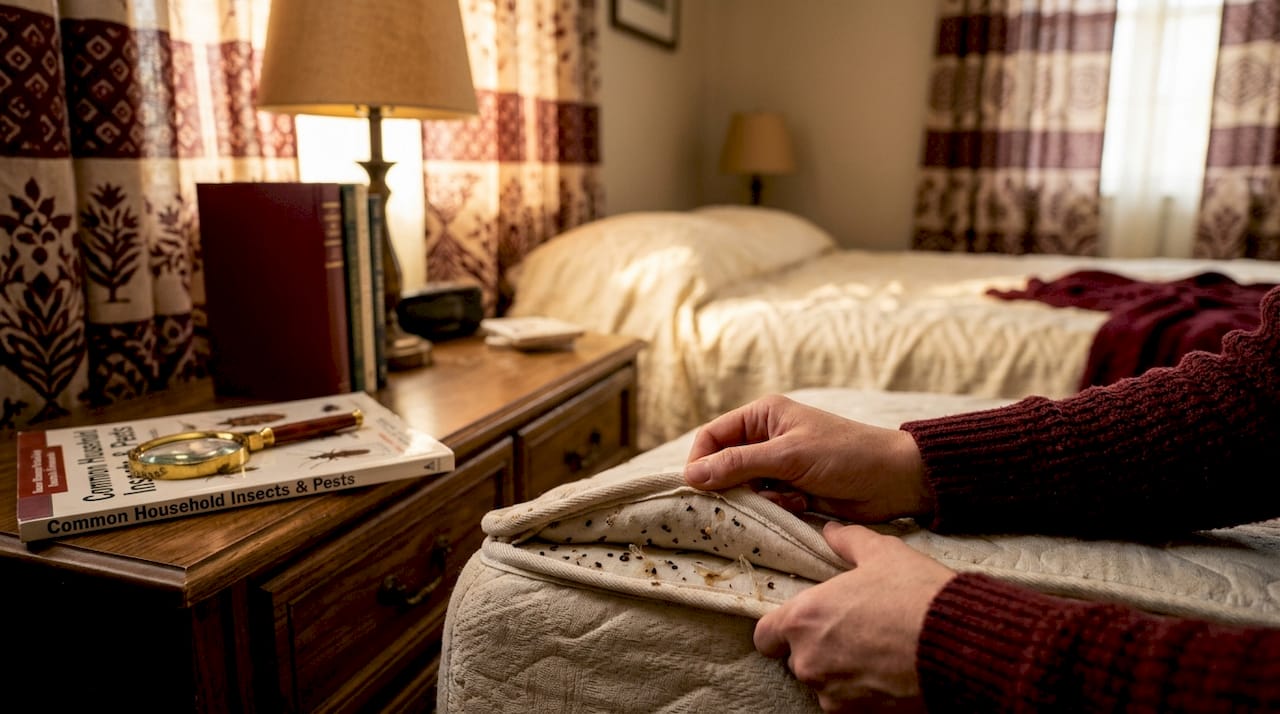
A bed bug infestation is defined by the presence of live Cimex lectularius insects, their fecal deposits, shed skins, and eggs in sleeping areas and nearby furniture. Spotting these signs early is the difference between a contained problem and a home-wide spread. The NHS, the EPA, and the National Pest Management Association (NPMA) all confirm that physical evidence in the environment is far more reliable than bite symptoms alone. This article walks you through every sign to look for, how to conduct a proper home bed bug inspection, and how to avoid the misidentifications that send most homeowners down the wrong path.
What physical signs indicate a bed bug infestation in your home?
The most reliable way to identify a bed bug infestation at home is to look for a combination of physical evidence rather than relying on any single sign. Bed bugs are small, reddish-brown insects measuring about 4 to 5 mm long, roughly the size of an apple seed, flat when unfed and swollen after a blood meal. They hide in dark crevices during the day, which means you will rarely spot one crawling in plain sight. Knowing what else they leave behind is what makes detection possible.
Here are the key physical signs to look for:
- Live bed bugs. Adult bugs are visible to the naked eye. Look for flat, oval, reddish-brown insects in mattress seams, bed frame joints, and furniture crevices. Nymphs (juveniles) are smaller and nearly translucent, making them harder to spot.
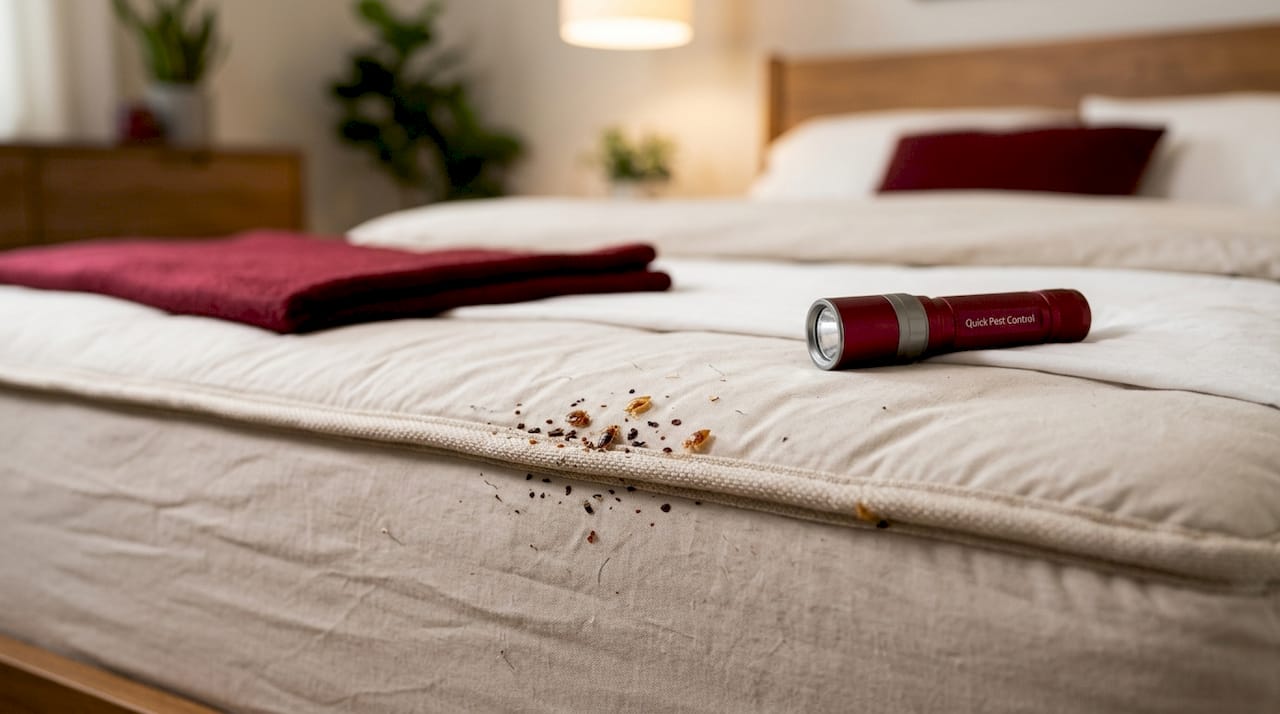
- Fecal stains. Dark brown or rust-colored spots on fabrics, mattress seams, or furniture surfaces are digested blood deposits. The NHS describes them as looking like small marker dots. They do not wipe off cleanly and tend to cluster near resting areas.
- Shed skins. Bed bugs molt five times before reaching adulthood. Each molt leaves behind a translucent, hollow exoskeleton. Finding multiple shed skins along mattress seams or inside box springs is strong evidence of an active colony.
- Eggs and eggshells. Eggs are tiny, about 1 mm, pearl-white, and often laid in clusters inside crevices. Empty eggshells are slightly flattened and dull in color.
- Blood spots on bedding. Rust-colored blood spots on bedding appear when a feeding bug is accidentally crushed during sleep. These spots are often the first thing homeowners notice.
- Musty odor. A sweet, musty smell similar to rotting berries or coriander is produced by bed bug scent glands. This odor only becomes noticeable in large, established infestations and is rarely present in early-stage cases.
The clustering of fecal spots and shed skins along mattress seams and crevices provides the most reliable environmental evidence for a bed bug infestation in a residential setting.
Pro Tip: Shine a flashlight at a low angle across mattress seams and fabric surfaces. This raking light technique makes fecal stains and shed skins cast tiny shadows, making them far easier to spot than under direct overhead lighting.
How to perform a thorough home bed bug inspection
A systematic inspection is the most effective bed bug detection method available to homeowners. Bed bugs feed at night and hide during the day in mattress seams, headboards, and nearby furniture, so daytime inspection of these spots is when evidence is easiest to find. Rushing through a visual check of just the mattress surface misses the majority of hiding locations.
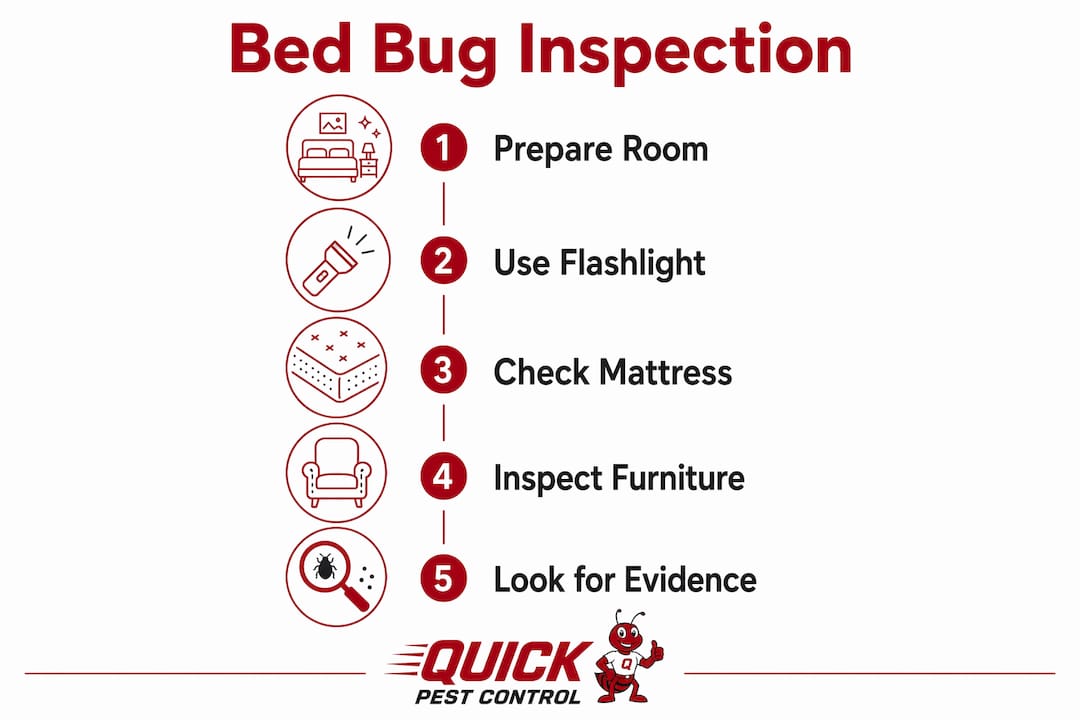
Follow these steps for a complete home bed bug inspection:
- Gather your tools. You need a bright flashlight, a magnifying glass, disposable gloves, and a thin flat tool like a credit card or old gift card. These allow you to probe seams and crevices without touching bugs directly.
- Strip the bed completely. Remove all bedding, pillowcases, and mattress covers. Examine each piece under good lighting for fecal stains, blood spots, and shed skins before placing them in a sealed bag for washing.
- Inspect the mattress. Work methodically around every seam, fold, and vent hole. Use the credit card to drag gently along seams and dislodge any hidden bugs or debris. Flip the mattress and repeat on the underside.
- Check the box spring. Remove the dust cover on the underside of the box spring. This is one of the most common hiding spots and is frequently overlooked. Look for fecal staining on the wood frame and fabric interior.
- Examine the bed frame and headboard. Inspect every joint, screw hole, and crack. Wooden frames are particularly attractive because they offer more crevices than metal frames.
- Move to nearby furniture. Nightstands, dressers, and upholstered chairs within a few feet of the bed are secondary hiding spots. Pull drawers out completely and inspect the undersides and back panels.
- Check walls and baseboards. Bed bugs can travel along walls and hide behind electrical outlet covers, under loose wallpaper, and along baseboard edges. The NHS confirms that behind pictures and under loose wallpaper are documented hiding locations.
- Place interceptor traps. Bed bug interceptor cups placed under each bed leg catch bugs traveling to and from the bed. Pheromone traps and interceptors improve detection accuracy and serve as ongoing monitoring tools after an initial inspection.
| Inspection zone | What to look for | Tools needed |
|---|---|---|
| Mattress seams and folds | Fecal stains, shed skins, live bugs | Flashlight, credit card |
| Box spring interior | Fecal staining, egg clusters, live bugs | Flashlight, magnifying glass |
| Bed frame joints and screw holes | Live bugs, fecal deposits | Flashlight, credit card |
| Nightstands and dresser drawers | Shed skins, fecal spots | Flashlight |
| Baseboards and outlet covers | Live bugs, fecal trails | Flashlight, flat tool |
Pro Tip: Inspect at dawn or just after waking. Bed bugs are most active in the hours before sunrise, so you are more likely to catch live movement during an early morning check than at midday.
How to differentiate bed bug signs from similar pests
90% of pest control calls for bed bugs involve misidentification, with carpet beetles accounting for 60% of those errors, flies for 48%, and cockroaches for 32%. Misidentifying the pest leads to the wrong treatment, wasted money, and a spreading infestation. Knowing the differences saves you from that outcome.
| Feature | Bed bugs | Carpet beetles | Fleas |
|---|---|---|---|
| Shape | Flat, oval | Rounded, domed | Laterally compressed |
| Color | Reddish-brown | Black, white, and orange patterned | Dark brown |
| Wings | None (wingless) | Present | None |
| Jump | No | No | Yes |
| Fecal evidence | Dark liquid spots on fabric | Dry, gritty pellets | Tiny black specks (flea dirt) |
| Bite location | Exposed skin during sleep | Rarely bites humans | Ankles and lower legs |
Beyond appearance, behavior separates these pests clearly. Carpet beetle larvae feed on natural fibers like wool and silk, so you will find damage to clothing and carpets rather than blood spots on bedding. Fleas jump visibly and concentrate around pet resting areas. Cockroach droppings are cylindrical with ridged edges, not the flat ink-dot appearance of bed bug fecal stains.
Fecal stains are a common point of confusion. Bed bug fecal spots absorb into fabric and look like a felt-tip marker dot. Mold spots, ink stains, and even rust marks can look similar at first glance. The key test is to dab the spot with a damp cloth. Bed bug fecal stains will smear slightly and turn a reddish-brown color as the dried blood rehydrates.
- Capture clear photographs of any suspect insects before attempting treatment.
- Collect a specimen in a sealed container or zip-lock bag if possible.
- Photographs and specimens greatly aid professional verification and minimize the risk of misidentification.
What do bed bug bites look like and how reliable are they for detection?
Bed bug bites appear as small, red, itchy welts, often in a clustered or linear pattern on exposed skin such as arms, shoulders, neck, and ankles. The pattern reflects the bug’s feeding behavior: it moves a short distance between bites, creating a line or zigzag of three to five welts sometimes called “breakfast, lunch, and dinner.” However, bite morphology is unreliable for diagnosing a bed bug infestation because dermatologic symptoms vary widely between individuals.
Key facts about bed bug bites:
- Reaction variability is significant. Roughly 30% of people show no visible skin reaction at all to bed bug bites. An absence of bites does not mean an absence of bugs.
- Symptoms overlap with other arthropods. Mosquito bites, flea bites, and mite bites can all produce nearly identical welts. No dermatologist can confirm bed bugs from a bite pattern alone.
- Delayed reactions are common. Some people develop welts days after the actual bite, making it harder to connect the symptom to the source.
- Psychological effects occur in severe cases. Prolonged infestations are associated with anxiety, sleep disruption, and in rare cases, secondary skin infections from scratching.
“Bite patterns alone should prompt investigation but not be relied on for definitive diagnosis. Environmental evidence is the standard for confirmation.” — NHS and dermatology expert guidance
The practical takeaway is straightforward. If you wake up with unexplained bites, treat that as a trigger to conduct a thorough environmental inspection rather than as proof of bed bugs. The bites point you toward the bedroom. The physical evidence in the mattress seams and furniture tells you whether bed bugs are actually there.
Key takeaways
Early identification of a bed bug infestation depends on finding physical evidence in the environment, specifically fecal stains, shed skins, and live insects in mattress seams and nearby furniture, not on bite symptoms alone.
| Point | Details |
|---|---|
| Physical evidence is definitive | Fecal stains, shed skins, and live bugs confirm infestation more reliably than bites. |
| Inspect beyond the mattress surface | Box springs, bed frames, baseboards, and outlet covers are primary hiding spots. |
| Bites are a trigger, not proof | Up to 30% of people show no bite reaction; always follow up with an environmental check. |
| Misidentification is extremely common | 90% of bed bug calls involve the wrong pest; photograph and collect specimens before treating. |
| Use tools and traps | A flashlight, credit card, and interceptor cups significantly improve detection accuracy. |
What I’ve learned from years of bed bug calls in London
The calls Quickpestcontrol receives most often follow the same pattern. A homeowner notices bites, assumes bed bugs, buys a spray from a hardware store, treats the mattress surface, and calls us three weeks later when the problem is worse. The spray killed the bugs on the surface but missed the colony living inside the box spring, behind the headboard, and along the baseboard. That delay costs people significantly more in treatment time and money.
The single biggest mistake I see is treating before confirming. Carpet beetle larvae look remarkably similar to bed bug nymphs under poor lighting, and the treatments for each pest are completely different. Spending money on a bed bug treatment for a carpet beetle problem solves nothing and gives the actual pest more time to spread.
My honest advice is to document everything before you act. Take photographs, collect a specimen if you can, and get a professional identification before committing to any treatment. Pest professionals recommend early expert identification specifically to avoid the costly DIY mistakes that turn a small infestation into a large one.
One more thing worth knowing: bed bugs in London are not confined to low-quality housing. They travel in luggage, on second-hand furniture, and on clothing. A five-star hotel stay can introduce them just as easily as a budget hostel. Approaching the situation calmly and methodically, rather than with panic, leads to faster resolution every time. You can find detailed inspection guidance for homeowners that mirrors what professional technicians use in the field.
— Azmat
Get expert help from Quickpestcontrol
Suspecting a bed bug infestation is stressful, but you do not have to figure it out alone. Quickpestcontrol provides professional bed bug inspection and treatment across London, using qualified technicians and Integrated Pest Management methods that target infestations at every life stage, not just the visible surface.

Quickpestcontrol’s team responds within an hour for emergencies and offers thorough inspections that cover every hiding spot covered in this article, and more. Whether you need a single inspection or ongoing monitoring for a property, the service is tailored to your situation. For broader residential pest control needs, Quickpestcontrol handles everything from identification through to full eradication. Call today and get a callback within the hour.
FAQ
What are the first signs of bed bugs in a house?
The first signs of bed bugs in a house are typically dark fecal stains on mattress seams, unexplained blood spots on bedding, and itchy welts on exposed skin after sleeping. Finding shed skins along mattress folds is also an early indicator of an active infestation.
How do I check for bed bugs during a home inspection?
Strip the bed completely and use a flashlight and credit card to probe mattress seams, box spring interiors, bed frame joints, and nearby furniture. Place interceptor cups under bed legs to catch bugs traveling to and from the sleeping area.
Can bed bug bites confirm an infestation?
Bite symptoms alone cannot confirm a bed bug infestation because reactions vary widely and overlap with mosquito, flea, and mite bites. A systematic review published in PLOS One confirms that bite morphology is unreliable for diagnosis without supporting environmental evidence.
What pests are most commonly confused with bed bugs?
Carpet beetles are the most common misidentification, accounting for 60% of incorrect bed bug calls according to the NPMA, followed by flies at 48% and cockroaches at 32%. Photographing the pest and collecting a specimen before treating significantly reduces the risk of treating for the wrong insect.
How often should I inspect my home for bed bugs?
Inspect your bedroom and sleeping areas every one to three months, especially after traveling, purchasing second-hand furniture, or having overnight guests. Using interceptor traps under bed legs provides continuous passive monitoring between active inspections.