Flies
Flies
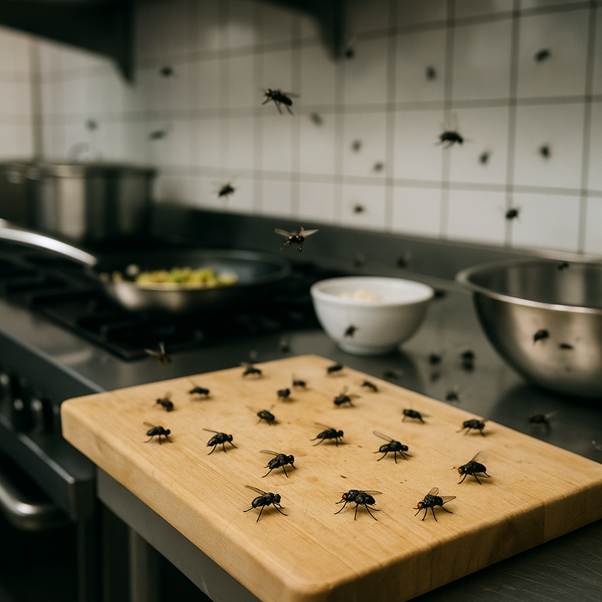
Flies are among the most common flying pests found in homes and businesses across London. While a few flies may seem harmless, large numbers often indicate a breeding site nearby. Learning how to identify different fly species and recognize the early signs of an infestation can help protect your property from hygiene issues and potential health risks.
Several fly species are commonly found in the UK, including house flies, cluster flies, bluebottle flies, fruit flies, and drain flies. Each species has different breeding habits and requires the right control approach.
House Fly
House flies are the most common type of fly found indoors. They are grey with four dark stripes on their thorax and usually measure between 6 and 8 mm in length.
House flies are attracted to food waste, rubbish bins, and decaying organic matter. They can contaminate food and surfaces by spreading bacteria.
Signs of House Flies
- Flies around kitchens and food preparation areas
- Increased activity near rubbish bins
- Dark fly spots on walls or windows
- Frequent buzzing indoors
Cluster Fly
Cluster flies are slightly larger than house flies and move more slowly. They often gather inside lofts, attics, and wall cavities during autumn and winter to shelter from colder weather.
Signs of Cluster Flies
- Large numbers of flies around windows
- Flies gathering in loft spaces
- Increased activity during cooler months
Bluebottle Fly
Bluebottle flies are easy to identify by their metallic blue bodies. They are commonly attracted to waste, animal carcasses, and rotting food.
Signs of Bluebottle Flies
- Metallic blue flies indoors
- Strong unpleasant odours
- Fly activity near waste bins
Fruit Fly
Fruit flies are tiny insects commonly found around ripe fruit, sugary drinks, and food waste. They reproduce quickly and are often seen in kitchens, cafés, restaurants, and bars.
Signs of Fruit Flies
- Small flies around fruit bowls
- Activity near sugary drinks
- Flies around kitchen sinks
Drain Fly
Drain flies are small, fuzzy insects with moth-like wings. They breed inside drains, sinks, and areas with moist organic matter.
Signs of Drain Flies
- Small flies around bathroom or kitchen drains
- Increased fly activity near sinks
- Persistent flies despite cleaning surfaces
Flies can carry bacteria such as Salmonella, E. coli, and Listeria, contaminating food and surfaces. Because female flies lay hundreds of eggs during their lifetime, infestations can develop very quickly if breeding sites are not removed.
Maintaining good hygiene, managing waste properly, and addressing infestations early are the best ways to reduce fly problems.
If you have noticed large numbers of flies in your home or business, our experienced technicians provide reliable Fly Control Services across London. We identify the source of the infestation, remove breeding sites, and use safe, effective treatments to help prevent flies from returning.
If you have noticed both flies and birds around your property, visit our Pigeon Identification guide to learn how pigeon activity can contribute to ongoing pest problems.
Take control of your pest problems now. For free quote/estimate, call us on
020 3949 0073 (Freephone) or contact us now!