
Bedbug heat treatment is defined as the controlled raising of indoor temperatures to lethal levels that kill bed bugs and their eggs through sustained, targeted thermal exposure. Unlike sprays or powders, thermal remediation (the industry term professionals use) attacks every life stage at once, including the notoriously resistant eggs. Understanding how bedbug heat treatment works gives you a realistic picture of what to expect, why it takes a full day, and why professional equipment is not optional. This guide covers the science, the step-by-step process, the honest trade-offs, and exactly how to prepare your home.
How does bedbug heat treatment work?
Thermal remediation works by raising the temperature inside an infested space until every hiding spot reaches a level lethal to bed bugs. The EPA’s bed bug IPM guidance specifies that heat must reach at least 120°F (49°C) and hold for 90 minutes to kill eggs effectively. That is the critical threshold. Anything below it, or held for less time, leaves eggs viable and the infestation alive.
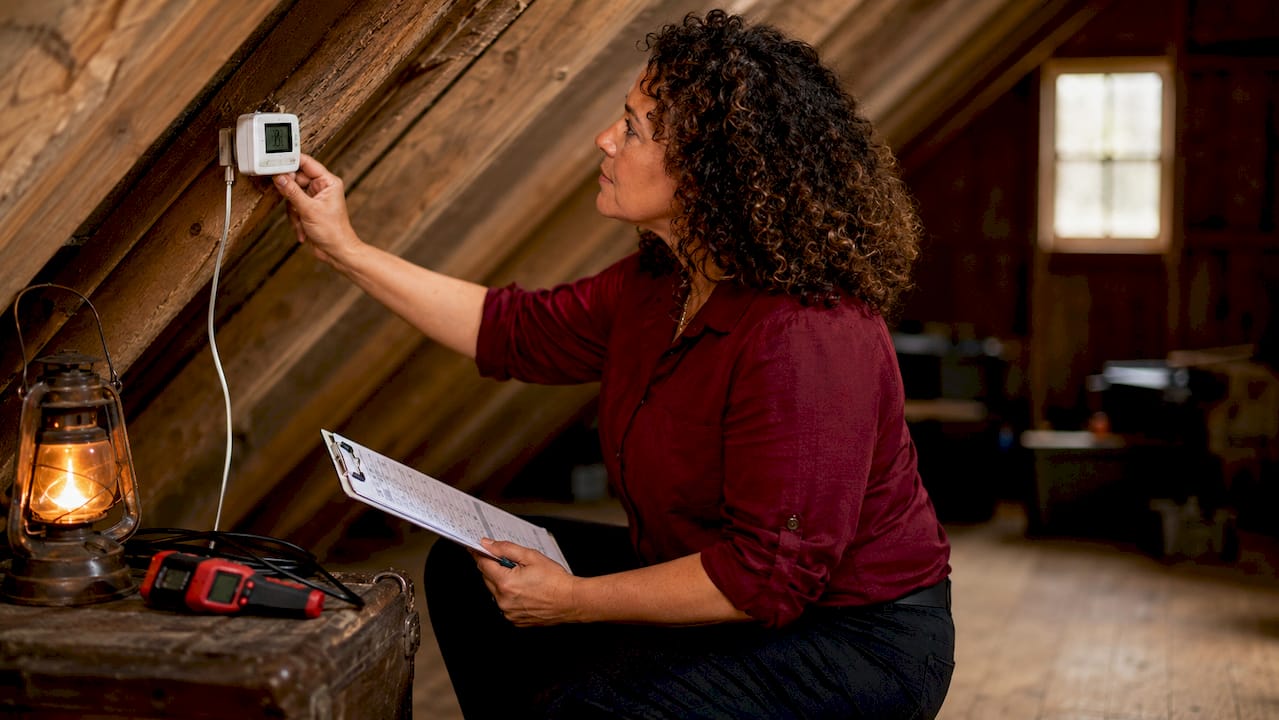
The reason this method is so thorough is penetration. Heat moves through mattress seams, wall crevices, skirting boards, and furniture joints where chemical sprays often cannot reach. Bed bugs have no trouble hiding in these spots, but they cannot survive sustained heat. A single properly executed treatment disrupts the entire lifecycle in one visit.
What temperature and exposure time actually kill bed bugs?
The science here is precise, and the numbers matter more than most homeowners realise.
Eggs are more heat-resistant than nymphs and adults, which is why the 90-minute dwell time at 49°C is the benchmark rather than a lower figure. Adults die faster at the same temperature, but if the treatment is cut short before eggs reach lethal exposure, the infestation restarts within weeks.
There is also a critical distinction between air temperature and the temperature inside a hiding spot. A room’s air may read 55°C while the centre of a thick mattress or inside a wall void is still only 40°C. Thermal mass like mattresses and dense furniture warm far more slowly than the surrounding air. This lag is why professional sensor arrays are placed at the coldest suspected locations, not just in the middle of the room.
Temperature vs. kill time by life stage
| Temperature | Exposure Time | Life Stages Killed |
|---|---|---|
| 46°C (115°F) | 7+ minutes | Adults, nymphs |
| 49°C (120°F) | 90 minutes | All stages including eggs |
| 54°C (130°F) | 30 minutes | All stages including eggs |
| 60°C (140°F) | Immediate | All stages including eggs |
Higher temperatures reduce the required dwell time, but achieving even heat distribution at 60°C throughout an entire flat is technically demanding. Most professional treatments target the 49°C–54°C range because it balances kill speed with safety for furnishings and fittings.
Pro Tip: Ask your technician where the temperature sensors are placed before treatment begins. If they are only in the centre of the room and not inside wardrobes, under mattresses, or behind skirting boards, the coldest hiding spots may not reach lethal temperature.
How do professionals carry out the bedbug heat treatment process?
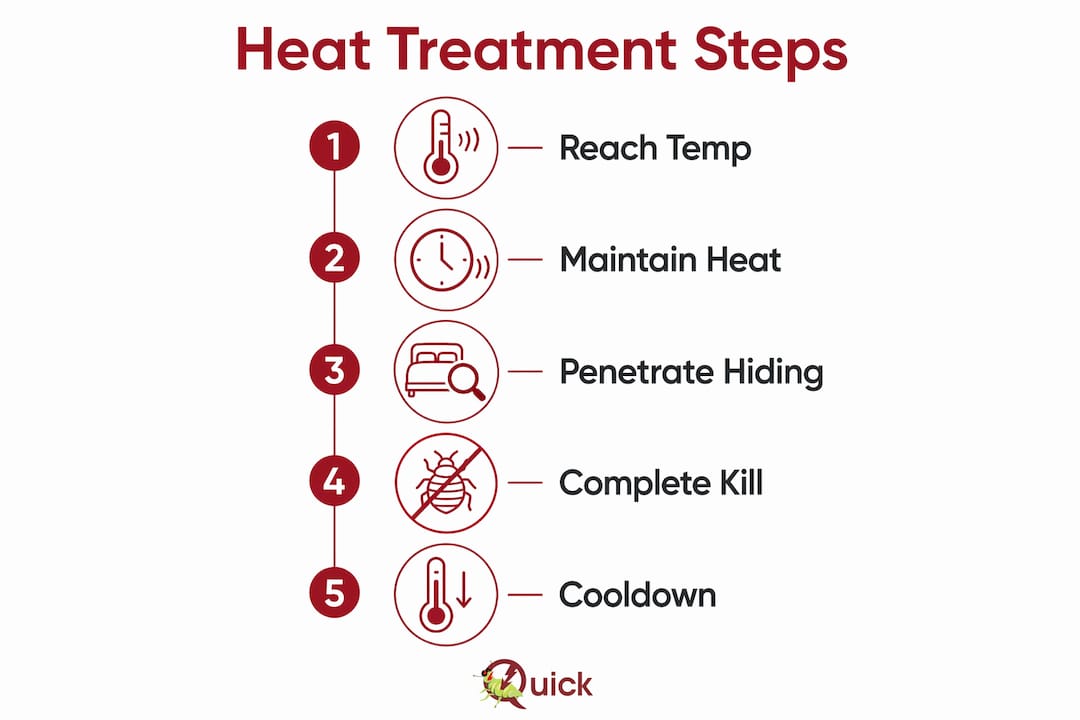
The professional heat treatment process involves electric heaters, high-volume fans, and a network of temperature sensors working together across the entire treatment area. Here is what a typical service day looks like from start to finish.
Step-by-step: what happens on treatment day
Technician arrival and setup. Equipment including industrial electric heaters and fans is positioned throughout the property. Sensors are placed at multiple locations including under furniture, inside wardrobes, and near skirting boards to monitor the coldest spots.
Gradual ramp-up phase. Temperatures are raised slowly and deliberately. A rapid spike could trigger smoke alarms, warp wooden furniture, or damage electronics. The controlled heating ramp protects the structure and prevents false alarms while still driving heat into every corner.
Hold phase. Once the target range of 120°F–150°F (49°C–65°C) is reached at all sensor locations, the hold phase begins. This typically lasts 4–6 hours. Technicians remain on site throughout, adjusting heater positions and fan angles to maintain even distribution.
Continuous monitoring. Temperature sensors in multiple rooms verify that heat is penetrating furniture and wall voids, not just warming the air. If a cold spot is detected, equipment is repositioned immediately.
Cooldown phase. Heaters are switched off and the property is allowed to cool gradually. Rushing this phase can cause condensation or structural stress. The cooldown typically adds 1–2 hours to the visit.
Post-treatment inspection. The technician checks for signs of surviving activity and confirms sensor logs show lethal temperatures were achieved and maintained throughout.
The total visit, from setup to safe re-entry, typically runs 6–8 hours. You will need to vacate the property for the entire duration, including any pets.
Pro Tip: Remove candles, aerosols, and any pressurised containers before treatment day. These items can be damaged or become hazardous at sustained high temperatures. Your technician should provide a full preparation checklist in advance.
Heat treatment vs. other bed bug control methods
Thermal remediation has clear advantages over chemical treatments and cold methods, but it also has genuine limitations worth knowing before you book.
Benefits of heat treatment for bed bugs
- Kills all life stages in a single visit. Heat penetrates furniture and cracks, reaching eggs and nymphs that chemical sprays often miss on first application.
- No pesticide residues. There are no chemical traces left on bedding, mattresses, or soft furnishings after treatment. This makes it the preferred choice for households with young children, pregnant women, or residents with chemical sensitivities.
- Faster results. Chemical treatments often require multiple visits over several weeks. A single properly executed heat treatment can resolve an infestation in one day.
- Reaches deep hiding spots. Heat moves into wall voids, mattress interiors, and furniture joints where sprays cannot penetrate reliably.
Limitations and cautions
- Professional equipment is non-negotiable. DIY heat methods are often ineffective because portable heaters and space heaters cannot maintain lethal temperatures throughout a room or verify penetration into hiding spots. Attempting DIY thermal treatment can also create fire risks.
- Cost. Professional thermal remediation costs more upfront than a single chemical treatment. However, the rapid results in a single visit often make it more cost-effective than multiple chemical applications.
- No residual protection. Heat eliminates the existing infestation but leaves no barrier against re-infestation. If bed bugs are reintroduced, a new treatment is needed.
- Preparation requirements. You must remove or protect heat-sensitive items, vacate the property, and follow a preparation checklist. Skipping steps reduces effectiveness.
Heat vs. cold vs. chemical: a quick comparison
| Method | Kills All Life Stages | Single Visit | No Residue | Whole-Home Practical |
|---|---|---|---|---|
| Heat treatment | ✓ | ✓ | ✓ | ✓ |
| Chemical spray | Partial | ✗ | ✗ | ✓ |
| Cold/freezing | ✓ | ✗ | ✓ | ✗ |
Cold treatment requires sustained freezing temperatures for several days, which is impractical for an entire home. Chemical treatments leave residues and typically require 2–3 visits. Heat treatment is the only method that combines whole-home coverage, single-visit results, and zero chemical residue.
How to prepare your home for a bed bug heat treatment
Preparation directly affects heat treatment effectiveness for bed bugs. A poorly prepared home creates cold spots and obstacles that reduce the treatment’s reach.
What to do before the technician arrives
- Clear clutter from floors and surfaces. Piles of clothing, books, and boxes block heat circulation and create cold pockets where bed bugs can survive.
- Unplug all electronics. Televisions, laptops, and gaming consoles should be removed or stored safely. Sustained heat can damage screens and batteries.
- Remove heat-sensitive items. Candles, aerosols, certain medications, vinyl records, and artwork should be taken out of the treatment area.
- Wash and bag bedding. Launder bedding at 60°C and seal it in bags before the technician arrives. This prevents re-contamination after treatment.
- Leave furniture in place. Do not move beds, sofas, or wardrobes. Technicians need access to these items because they are the primary harbourage sites.
- Arrange alternative accommodation. You, your family, and all pets must leave the property for the full treatment duration of 6–8 hours.
What to expect after treatment
Re-entry is safe once the property has cooled to normal temperature, which your technician will confirm. You may notice a faint warm smell for a few hours. Dead bed bugs may be visible on surfaces, which is a positive sign the treatment worked. Monitor for any signs of activity over the following two weeks. Heat treatment as part of an IPM plan is the most thorough approach, combining thermal remediation with follow-up inspections to confirm the infestation is fully resolved.
A common myth is that turning up your central heating or using a steam cleaner achieves the same result. It does not. Domestic heating systems cannot reach or sustain 49°C throughout a room, and steam cleaners only treat the surface they touch. Professional temperature monitoring is what separates a verified kill from a temporary reduction in activity.
Pro Tip: Take photographs of your preparation before the technician arrives. This gives you a record of compliance and helps identify any areas that may need attention if a follow-up inspection is required.
Get expert bed bug heat treatment from quick pest control london
Quick Pest Control London uses professional-grade electric heaters, high-volume fans, and calibrated sensor arrays to deliver thorough thermal remediation across London homes and rental properties. Every treatment follows a monitored process with verified temperature logs, so you know lethal conditions were reached in every room.

If you are dealing with an active infestation, the bedbug pest control service from Quick Pest Control London is designed to resolve it in a single visit. The team also handles flea control, cockroach treatments, and rodent removal across London. Call now or request a callback within the hour to get a qualified technician to your property fast.
FAQ
What temperature kills bed bugs and their eggs?
Heat must reach 49°C (120°F) and hold for at least 90 minutes to kill bed bug eggs. Adults and nymphs die faster, but eggs are the most heat-resistant stage.
How long does a professional bed bug heat treatment take?
A full treatment visit typically takes 6–8 hours, including equipment setup, a 4–6 hour hold phase at lethal temperature, and a cooldown period before safe re-entry.
Is heat treatment safe for my home and belongings?
Yes, when carried out by a qualified technician. The controlled ramp-up and cooldown protect your home’s structure and prevent damage to furnishings, provided heat-sensitive items are removed beforehand.
Can i do bed bug heat treatment myself?
DIY methods are not effective. Domestic heaters cannot maintain lethal temperatures throughout a room or verify penetration into hiding spots, and they carry a fire risk without professional monitoring equipment.
Does heat treatment prevent bed bugs from coming back?
No. Thermal remediation eliminates the existing infestation but leaves no residual barrier. Pairing treatment with an integrated pest management follow-up plan is the best way to confirm full clearance and reduce the risk of reintroduction.