
Common bedbug hiding spots are small, dark crevices located within a few feet of where humans sleep or sit, including mattress seams, box springs, upholstered furniture, and wall cracks. The industry term for these locations is harborage sites, and knowing exactly where to look is the difference between catching an infestation early and letting it spread through your entire home. The NHS confirms that bedbugs hide in furniture, clothing, behind pictures, and under loose wallpaper, leaving behind blood spots and fecal marks as evidence. If you are dealing with a suspected infestation, this guide covers every major and minor harborage site you need to inspect.
1. Common bedbug hiding spots on mattresses and box springs
The mattress is the single most likely place to find bedbugs in any home. Bedbugs feed at night and retreat to mattress seams, headboards, and nearby furniture during daylight hours, which means the seams and folds of your mattress are their preferred daytime shelter. Texas A&M AgriLife recommends inspecting the rolling edges of mattress seams specifically for fecal spots, which look like small dark ink dots pressed into the fabric.
The box spring is equally important and often more heavily infested than the mattress surface itself. Its hollow interior, wooden frame, and fabric lining give bedbugs dozens of undisturbed hiding areas. Pull back the dust cover on the underside of your box spring and use a flashlight to check every corner and joint.
Key spots to inspect on and around the bed:
- All four seams and the piping along the edges of the mattress
- Folds, tufts, and any stitched labels on the mattress surface
- The interior frame and fabric lining of the box spring
- Wooden slats and any metal joints connecting the bed frame
- The underside of the headboard and any decorative carvings or grooves
Pro Tip: Scrub a stiff-bristled brush along mattress seams before vacuuming. This dislodges eggs and nymphs that cling tightly to fabric fibers and would otherwise survive a standard vacuum pass.
2. Bed frames and headboards
Wooden bed frames and headboards are prime bedbug harborage sites because they offer multiple cracks, joints, and screw holes within inches of a sleeping person. Baltimore City Health guidance notes that bedbugs can squeeze into any gap approximately the width of a credit card, which means every joint, corner bracket, and screw hole in your bed frame qualifies as a potential hiding spot. Metal frames are slightly less hospitable but still harbor bedbugs in hollow tubing and connecting hardware.
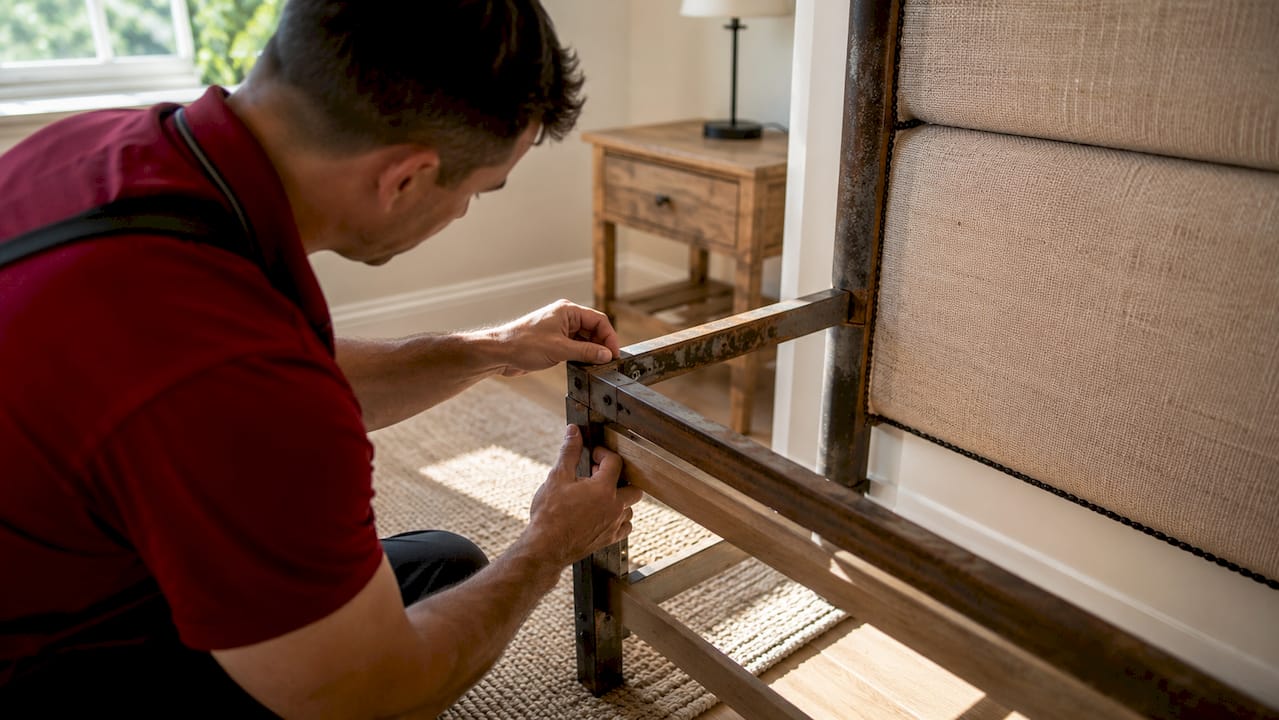
Headboards deserve extra attention, especially upholstered or padded designs. The fabric backing, stapled edges, and foam padding create layered hiding areas that are difficult to inspect without removing the headboard from the wall entirely. Detach it, lay it flat, and inspect every seam and tack point with a flashlight.
3. Where do bedbugs hide in upholstered furniture?
Sofas, armchairs, and recliners are the second most common bedbug hotspots in homes after the bed itself. Angi’s research identifies upholstered furniture seams, couch pillows, curtains, and bedroom drawers as frequently overlooked harborage sites. Bedbugs move from the bed to nearby seating as an infestation grows, following the warmth and carbon dioxide of their human hosts.
Signs to look for in upholstered furniture include:
- Rust-colored fecal spots on cushion fabric or underneath seat cushions
- Shed skins (translucent, hollow shells) in the gaps between cushion and frame
- Live bugs or eggs along the piping and seams of sofa arms and backrests
- Blood smears on light-colored fabric where bugs have been crushed
Pro Tip: Before bringing any secondhand sofa, armchair, or upholstered dining chair into your home, inspect every seam and cushion gap outdoors in bright daylight. A single infested piece of furniture can seed an entire room within weeks.
4. Curtains, bedroom drawers, and soft furnishings
Curtains are a less obvious but confirmed bedbug hiding location, particularly in folds near the floor where fabric pools or bunches. Bedbugs do not need to be on a sleeping surface. They need to be close to one. A curtain rod directly above or beside the bed puts the fabric within easy traveling distance. Check the hem, the rod pocket, and any gathered folds along the full length of the curtain.
Bedroom drawers and nightstands are equally worth examining. The underside of drawer bottoms, the joints where drawer slides meet the frame, and any paper lining inside the drawer all provide shelter. Items stored in drawers, such as folded clothing and books, can also harbor bugs or eggs between pages and fabric layers.
5. Walls, baseboards, and behind wall decor
Bedbugs hide behind pictures and under loose wallpaper, making wall surfaces a critical part of any thorough inspection. This surprises many homeowners who assume bedbugs stay on soft surfaces. In reality, any crack or gap in a wall near a sleeping area is a viable harborage site. Loose wallpaper edges, peeling paint, and gaps where baseboards meet the floor all qualify.
Electrical outlets near the bed are another overlooked spot. Bedbugs are attracted to warmth, and outlets near sleeping areas provide both heat and a protected cavity. Remove the outlet cover plate and inspect the gap around the box with a flashlight. The same logic applies to alarm clocks and laptop charging bricks left on nightstands. Heat-emitting electronics near sleeping areas can harbor infestations that are easy to miss when focusing only on fabric surfaces.
Spots to check along walls and structural surfaces:
- Cracks where walls meet the ceiling or floor
- Behind framed pictures, mirrors, and wall-mounted shelves
- Under loose sections of wallpaper or peeling paint
- Along the top and bottom edges of baseboards
- Inside and around electrical outlet boxes
6. Luggage, clothing, and travel items
Bedbugs hitchhike into homes via luggage, furniture, bedding, and clothing, making travel items a primary entry vector. A single trip to an infested hotel room is enough to bring bedbugs home inside a suitcase. They hide in the lining, pockets, and seams of luggage, and they can remain dormant for months without feeding.
After any trip, inspect your luggage outside or in a garage before bringing it indoors. Wash all clothing from the trip in hot water and dry on the highest heat setting your fabrics allow. Store luggage in sealed plastic bags or in a room far from the bedroom when not in use. If you suspect your bag is infested, place it inside a large black plastic bag and leave it in direct sunlight for several hours. The heat buildup can kill bugs and eggs.
7. How to prioritize inspection using the ring method
The most effective framework for detecting bedbug infestations is the ring inspection method, which Baltimore City recommends as the standard practitioner approach. Start at the bed and work outward in expanding rings, checking every harborage site systematically before moving to the next zone. This prevents the common mistake of jumping between areas and missing pockets of infestation.
Pro Tip: Conduct your inspection during daylight hours with a bright flashlight and a credit card or thin plastic card. Use the card to probe seams and gaps. If you see bugs scatter, you have confirmed a harborage site.
The table below summarizes the main hiding locations, how difficult they are to detect, and the key signs to look for:
| Hiding location | Detection difficulty | Key signs |
|---|---|---|
| Mattress seams and folds | Low | Fecal spots, shed skins, live bugs |
| Box spring interior | Medium | Eggs, live bugs, fecal staining on fabric |
| Bed frame joints and screw holes | Medium | Fecal spots, live bugs in cracks |
| Upholstered furniture seams | Medium | Shed skins, fecal spots, blood smears |
| Wall cracks and behind decor | High | Fecal spots, live bugs in crevices |
| Luggage and clothing | High | Live bugs, eggs in seams and pockets |
| Electronics and outlets | High | Live bugs near heat sources |
8. Common misconceptions about bedbug hiding areas
The most damaging myth about bedbugs is that they only infest dirty or cluttered homes. The NHS is clear that bedbugs can infest clean, well-kept homes and hide in structural gaps and behind wallpaper regardless of housekeeping standards. Cleanliness does not deter bedbugs. Proximity to a human host does.
A second common mistake is focusing the entire inspection on the visible mattress surface. Bedbugs spend most of their time in harborage, not on the sleeping surface. Inspecting only the top of the mattress while ignoring seams, the box spring, and the bed frame will miss the majority of the population.
Other myths worth correcting:
- “I would see them if they were there.” Bedbugs are nocturnal and hide in tight gaps during the day. You will rarely spot them without a deliberate, flashlight-assisted inspection.
- “Bedbugs only live in the bedroom.” As infestations grow, bedbugs spread to living rooms, hallways, and even offices.
- “Bites confirm bedbugs.” Bites alone are not reliable evidence. Many people show no reaction at all. Look for physical signs like fecal spots, shed skins, and eggs instead.
De-cluttering your bedroom reduces the number of available harborage sites and makes inspection significantly easier. Fewer items on the floor and fewer stacked objects near the bed mean fewer places for bedbugs to hide undetected.
Key takeaways
Bedbugs hide in any credit-card-width gap near sleeping or sitting areas, so effective detection requires a systematic, room-wide inspection starting at the mattress and expanding outward to walls, furniture, and luggage.
| Point | Details |
|---|---|
| Start at the mattress | Seams, folds, and the box spring interior are the highest-probability harborage sites. |
| Expand to furniture | Sofa seams, cushion gaps, and upholstered chair joints are common secondary hiding areas. |
| Check walls and electronics | Outlet boxes, wall cracks, and heat-emitting devices near the bed harbor overlooked infestations. |
| Inspect luggage after travel | Suitcase linings and clothing seams are the primary entry route for bedbugs into clean homes. |
| Use the ring method | Start at the bed and work outward systematically to avoid missing hidden pockets. |
What I’ve learned from years of bedbug inspections
Most people who contact a pest control professional do so after weeks of failed self-treatment, and the reason is almost always the same. They treated the mattress surface and stopped there. The bugs were living in the bed frame, the box spring, the sofa, or behind the baseboard the entire time, completely untouched by any spray or powder applied to the mattress.
The spots that catch people off guard are the electronics and the luggage. I have seen harborage in wall cracks and around fixtures that homeowners walked past every day without suspecting anything. An alarm clock sitting on a nightstand, plugged in and warm all night, is genuinely attractive to bedbugs. Most people never think to check it.
The other thing I want to stress is re-infestation. Even a thorough treatment fails if you miss a single harborage site. Eggs are particularly resilient, and a clutch of eggs tucked inside a screw hole in the bed frame can restart an infestation within weeks. Systematic inspection is not a one-time task. Check again two weeks after any treatment, and again two weeks after that. Bedbugs are patient. Your inspection needs to be more patient than they are.
— Azmat
Get professional bedbug help from Quickpestcontrol

Spotting the signs is the first step. Eliminating every harborage site is where professional expertise makes the real difference. Quickpestcontrol provides specialist bedbug treatment across London, using advanced inspection technology and qualified technicians trained to find infestations in every location covered in this guide, including the ones most homeowners miss. Their Integrated Pest Management approach targets bugs, eggs, and harborage sites together, not just the surface. If you need residential pest control or have an urgent infestation, Quickpestcontrol guarantees a callback within one hour. Contact the team at quickpestcontrol.uk before the infestation spreads further.
FAQ
Where do bedbugs hide most often?
Bedbugs most commonly hide in mattress seams, box spring interiors, and bed frame joints because these locations sit closest to their human hosts. As infestations grow, they spread to upholstered furniture, baseboards, and wall cracks.
Can bedbugs hide in walls and electrical outlets?
Yes. Bedbugs squeeze into gaps as narrow as a credit card’s width, including wall cracks, behind baseboards, and inside electrical outlet boxes near sleeping areas.
How do I know if bedbugs are hiding in my furniture?
Look for rust-colored fecal spots, translucent shed skins, and small white eggs along seams, cushion gaps, and the underside of furniture frames. Live bugs may also scatter when you expose a harborage site to light.
Do bedbugs hide in luggage?
Bedbugs regularly hitchhike into homes inside luggage, hiding in lining seams and pockets. Inspect and heat-treat all travel bags after any trip, and store luggage away from the bedroom when not in use.
Can a clean home have bedbugs?
Absolutely. The NHS confirms that bedbugs infest clean, well-kept homes just as readily as cluttered ones. Cleanliness has no bearing on infestation risk. Proximity to a human host is the only factor that matters to a bedbug.