Pest control is a foundational element of property maintenance, directly protecting structural integrity, tenant wellbeing, and long-term asset value. For property owners and managers in London, the role of pest control in property maintenance extends well beyond calling out a technician when something scurries across the floor. It encompasses proactive inspections, Integrated Pest Management (IPM), physical exclusion work, and compliance with health obligations. Neglecting this discipline costs far more than addressing it early. Properties with unmanaged infestations face accelerated structural decay, tenant complaints, and legal exposure. The good news is that a structured approach, combining professional expertise with day-to-day maintenance habits, keeps most problems from taking hold in the first place.
What does a professional pest inspection involve?
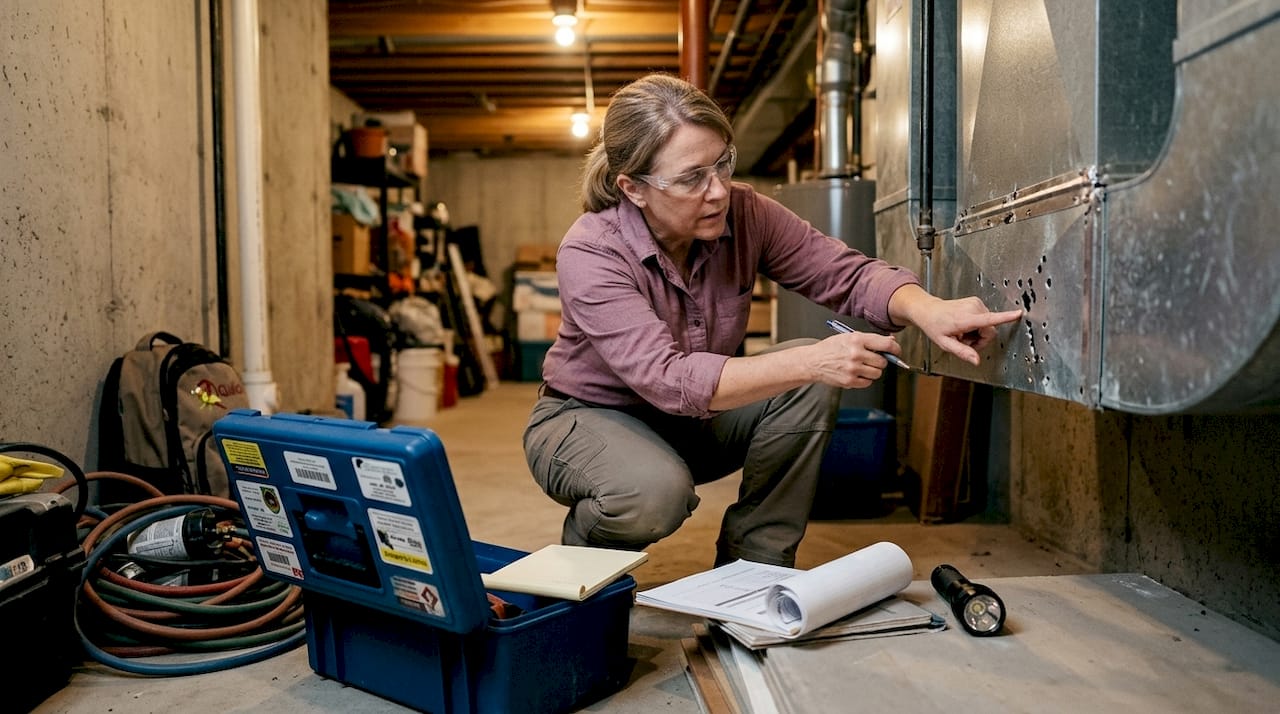
A professional pest inspection is a diagnostic process, not simply a search for visible pests. Its purpose is to identify conditions that make infestation likely, so that maintenance teams can act before a problem takes hold.
A standard inspection follows a clear structure:
- Exterior walk-around. The technician inspects the building perimeter for 20 to 30 minutes, checking entry points, drainage, vegetation contact, and signs of burrowing or nesting. This stage catches the access routes that pests exploit before they ever reach interior spaces.
- Interior room-by-room assessment. The interior check takes 20 to 40 minutes and focuses on kitchens, bathrooms, basements, and attics. These are moisture-prone and structurally complex areas where pests find food, water, and shelter most easily.
- Diagnostic tool use. Professional technicians use moisture meters, UV lighting, and probing tools to detect hidden damage and conditions invisible to the naked eye. A damp wall cavity that looks fine on the surface may already be harbouring a rodent run or a termite trail.
- Conditions assessment. Rather than simply recording what pests are present, a good inspection identifies conducive conditions such as poor drainage, leaking pipes, and inadequate ventilation. This informs a prioritised repair list, not just a treatment plan.
- Written report. The technician produces a report detailing findings, risk areas, and recommended actions. This document becomes a working tool for maintenance scheduling.
The total inspection window of 40 to 70 minutes is short relative to the value it delivers. A single missed moisture issue can lead to months of rodent activity before it becomes visible to residents.
Pro Tip: Read inspection reports alongside your maintenance schedule. Any condition flagged as “conducive” is a repair job waiting to be booked, not just a note to file away.
How does integrated pest management support property upkeep?
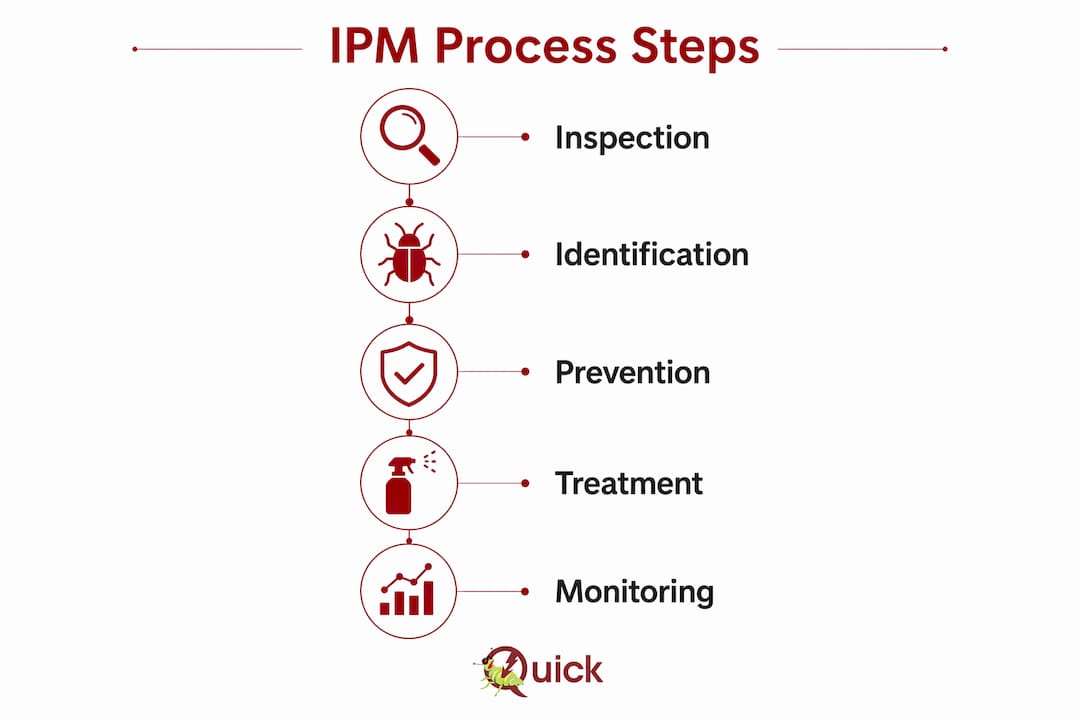
Integrated Pest Management, or IPM, is the industry-standard framework for pest control in residential and commercial properties. It prioritises prevention, monitoring, and targeted intervention over reactive chemical treatments.
Successful IPM in multi-family housing depends on teamwork among residents, maintenance staff, management, and pest professionals to eliminate the food, water, and shelter sources that pests depend on. This is a critical distinction. IPM is not something a pest control operator delivers alone. It is a shared operational responsibility.
The core principles of IPM in a property context include:
- Prevention first. Structural repairs, waste management, and sanitation remove the conditions pests need to survive. A property that offers no reliable food or harbourage is genuinely less attractive to rodents, cockroaches, and ants.
- Monitoring and thresholds. Glue traps, pheromone monitors, and regular visual checks track pest pressure over time. Action is triggered by evidence, not assumption.
- Targeted treatment. When intervention is needed, it is applied precisely, using the least disruptive method appropriate to the pest and location.
- Review and adaptation. IPM programmes are reviewed regularly. What works in a Victorian terrace in Hackney may need adjustment for a modern flat block in Canary Wharf.
The financial case for IPM is straightforward. Reactive pest treatments cost significantly more than proactive maintenance strategies. A single reactive rodent clearance in a multi-unit building, including follow-up visits, deep cleaning, and potential structural repairs, can run to several hundred pounds. A quarterly IPM contract covering the same building costs a fraction of that.
| Approach | Characteristics |
|---|---|
| IPM (proactive) | Prevention-led, multi-team collaboration, monitoring-based, lower long-term cost |
| Reactive pest control | Treatment-only, triggered by visible infestation, higher per-incident cost, recurrence risk |
| Chemical-only programmes | Addresses symptoms, not causes; may require repeated applications; higher chemical exposure |
| IPM with maintenance integration | Combines structural repairs, sanitation, and professional treatment for lasting results |
Property managers who own the operational environment rather than delegating it entirely to a pest control operator see consistently better outcomes. The pest professional manages treatments. The manager manages the conditions.
Common pest exclusion and maintenance strategies
Pest exclusion is the physical and operational work that denies pests access to a building. It is the most durable form of pest control available, and it sits squarely within the property maintenance remit.
Pest exclusion in commercial and residential properties is a strategic, facility-wide effort involving multiple teams prioritising structural vulnerability fixes and sanitation. Maintenance teams act as the first line of defence by identifying early signs and structural gaps before they become active infestation routes.
Practical exclusion measures include:
- Sealing gaps and cracks. Mice can slip through a gap the width of a pencil. Any opening around pipework, cables, or structural joints at ground level or below should be filled with wire wool and mortar or a proprietary sealant.
- Repairing and fitting screens. Air bricks, vents, and windows in older London properties are common entry points for insects and small rodents. Stainless steel mesh screens fitted correctly last for years.
- Fixing leaks and managing moisture. Cockroaches and rodents are drawn to water sources. A dripping pipe under a kitchen unit or a damp basement corner is an open invitation.
- Waste management discipline. Bins stored against building walls, overflowing refuse areas, and food waste left in communal spaces give pests a reliable food source. Structured waste schedules and lidded bins remove this attractant.
- Monitoring tools. Glue boards and rodent monitoring stations placed in high-risk areas, such as plant rooms, bin stores, and basement corridors, give early warning of activity before it escalates.
Pro Tip: Schedule a brief exclusion audit every six months alongside your routine property checks. Small repairs carried out early, a cracked air brick here, a loose drain cover there, prevent the large-scale infestations that require professional clearance and tenant disruption.
Collaboration between maintenance staff and pest professionals is what makes exclusion work over time. Technicians identify vulnerabilities during inspections. Maintenance teams carry out the repairs. Neither group can deliver lasting results without the other.
How does pest control fit into refurbishment and health inspections?
Refurbishment projects and health inspections are two contexts where pest control is frequently underestimated, and where the consequences of getting it wrong are most visible.
During a refurbishment, opening walls, lifting floors, and disturbing roof spaces can expose existing infestations or create new entry points. A pest inspection carried out before work begins allows the project team to address active problems before contractors inadvertently spread them through the building. It also prevents the costly scenario of completing a refurbishment only to discover a rodent problem that was present throughout.
Combining pest and building inspections provides a comprehensive risk assessment that is critical during property refurbishment and health audits. Many owners mistake building inspections for pest inspections. A structural survey will not identify wood decay caused by wood-boring insects, nor will it flag the moisture conditions that attract pests. Both reports are needed for a complete picture.
For health inspections in multi-tenant buildings, the stakes are higher still. Local authority environmental health officers assess pest evidence as part of housing fitness assessments. A documented pest problem can trigger formal notices, affect tenancy agreements, and in serious cases result in legal action against the landlord.
Key considerations for pest control in refurbishment and health compliance:
- Commission a pest inspection before any major refurbishment begins, not after.
- Request combined pest and structural reports to avoid gaps in risk assessment.
- Maintain documentation of all pest control activity, including inspection reports, treatment records, and contractor communications.
- Inform tenants of pest control activity in writing, particularly during refurbishment, to meet legal obligations and maintain trust.
- Address any pest-conducive conditions identified during health inspections within the timeframes specified by the inspecting authority.
Hotels undergoing refurbishment face a particular version of this challenge. Pest control fits hotel refurbishment planning as an operational necessity, not an afterthought, given the reputational and regulatory consequences of a bedbug or rodent sighting during or after works.
Key takeaways
Effective pest control in property maintenance requires proactive inspection, IPM collaboration, and physical exclusion working together rather than any single reactive treatment.
| Point | Details |
|---|---|
| Inspection is diagnostic | Professional pest inspections identify conducive conditions, not just active infestations, guiding maintenance priorities. |
| IPM is a shared responsibility | Property managers, maintenance staff, residents, and pest professionals all contribute to successful pest prevention. |
| Exclusion is the most durable defence | Sealing entry points, managing moisture, and maintaining sanitation remove the conditions pests depend on. |
| Refurbishment needs pest assessment first | A pre-refurbishment pest inspection prevents infestations from spreading during and after building works. |
| Documentation protects you legally | Records of inspections, treatments, and communications are critical during health inspections and tenancy disputes. |
Why property managers need to own pest control, not just commission it
I have worked with a lot of property managers over the years, and the most common gap I see is not a lack of budget or access to good pest control services. It is a misunderstanding of where the pest professional’s responsibility ends and where the property manager’s begins.
The pest control operator treats. The property manager owns the environment. When a building keeps getting re-infested despite regular treatments, the cause is almost always an unresolved maintenance issue: a drain that was never properly sealed, a bin store that floods in heavy rain, a communal kitchen where food hygiene standards are inconsistent. No amount of treatment fixes a structural invitation.
The property managers who get this right tend to have a few things in common. They read inspection reports carefully and act on the maintenance recommendations, not just the treatment recommendations. They brief maintenance staff on early warning signs, so that a rodent dropping spotted during a routine check gets reported immediately rather than ignored. And they build pest management into their refurbishment planning from the outset, rather than treating it as a final snag item.
The economic argument for this approach is not subtle. Proactive pest prevention consistently costs less than reactive clearance, and the reputational cost of a visible infestation in a managed property is harder to quantify but very real. Tenants talk. Reviews get written. Voids get longer.
My honest recommendation is to develop a written pest management policy for your portfolio, even a simple one. It forces clarity about responsibilities, inspection frequencies, and escalation procedures. It also gives you something concrete to show an environmental health officer if you ever need to.
— Haroon
How Quick Pest Control London supports property managers
Quick Pest Control London works with property managers and landlords across London to deliver pest control that fits within a structured maintenance programme, not just a one-off call-out.
Whether you manage a single rental property or a portfolio of multi-unit buildings, Quick Pest Control London offers tailored inspection and treatment plans designed around your maintenance schedule. From cockroach control services in commercial kitchens to rats and mice control in residential blocks, the team brings qualified technicians and IPM-led methodology to every job. For ongoing protection, a pest management contract provides scheduled inspections, priority response, and full documentation for compliance purposes. If you need to understand the full range of pest control services available, or want to discuss a refurbishment project, Quick Pest Control London offers a callback within an hour for urgent enquiries.
FAQ
What does a pest inspection involve for a rental property?
A professional pest inspection covers an exterior walk-around and an interior room-by-room assessment, typically lasting 40 to 70 minutes in total. Technicians use moisture meters, UV lighting, and probing tools to identify both active pests and the conditions that attract them.
How is a pest inspection different from a building inspection?
A building inspection assesses structural integrity, while a pest inspection identifies pest activity, wood decay, and moisture conditions that structural surveys miss. Both reports should be combined for a complete risk assessment, particularly before a refurbishment.
What is Integrated Pest Management in property maintenance?
Integrated Pest Management (IPM) is a prevention-led framework that combines structural maintenance, sanitation, monitoring, and targeted treatment. It relies on collaboration between property managers, maintenance staff, residents, and pest professionals to remove the conditions pests need to survive.
How often should a managed property be inspected for pests?
Most managed properties benefit from quarterly pest inspections, with additional checks before and after any refurbishment work. High-risk properties, such as those with communal kitchens, bin stores, or basement plant rooms, may require more frequent monitoring.
Can pest problems affect a landlord’s legal obligations?
Yes. Environmental health officers assess pest evidence during housing fitness inspections, and a documented infestation can trigger formal notices or legal action. Maintaining records of all inspections, treatments, and maintenance actions is the most reliable way to demonstrate compliance.