
Bedbugs are defined as one of the most resilient household pests in the world, and their difficulty to eliminate comes down to biology, behaviour, and the limits of common treatments. A single introduction of just 10 bedbugs can grow to over 1,000 within three months. That explosive growth rate means a small, undetected problem becomes a serious infestation faster than most people realise. Understanding why bedbugs are hard to eliminate is not just reassuring. It is the first step towards choosing a treatment that actually works.
Why are bedbugs so hard to eliminate?
Bedbugs, known in pest management as Cimex lectularius, are notoriously difficult to eradicate because three forces work against you simultaneously: their reproductive biology, their instinct to hide in places sprays cannot reach, and their growing resistance to common insecticides. No single treatment addresses all three. That is precisely why so many homeowners find themselves still dealing with an infestation weeks after a first attempt. The difficulty eliminating bedbugs is not a reflection of poor effort. It is a reflection of how well-adapted these insects are to surviving human intervention.
How does bedbug biology make elimination so difficult?
The biology of bedbugs is the foundation of every bedbug infestation challenge you face. Understanding it explains why treatments that seem thorough still leave survivors.
- Egg resistance. Bedbug eggs resist many pesticides and take up to 14 days to hatch. A spray applied today will kill adults on contact but leave a fresh wave of hatchlings ready to feed within two weeks. This single fact is why one-time treatments almost always fail.
- Rapid reproduction. A single female bedbug lays between one and five eggs per day throughout her adult life. Combined with the 10 to 1,000 growth rate achievable in 90 days, even a handful of survivors after treatment can rebuild a full infestation quickly.
- Survival without feeding. Adult bedbugs can survive for several months without a blood meal, depending on temperature and humidity. This means vacating a room or even a property for a few weeks will not starve them out.
- Multiple life stages. Bedbugs pass through five nymph stages before reaching adulthood. Nymphs are smaller, harder to spot, and in some stages nearly translucent against pale surfaces.
Why are bedbugs resilient? Because their life cycle is built for persistence. Each stage presents a different challenge, and no single chemical or physical method addresses all of them at once.
Pro Tip: Mark your calendar two weeks after any treatment. That is when eggs laid just before the treatment will begin hatching. A follow-up inspection or treatment at that point is not optional. It is the difference between control and reinfestation.
How does hiding behaviour complicate bedbug removal?
Even if a treatment is chemically effective, it cannot work on bugs it cannot reach. Bedbugs have an innate behaviour called thigmotaxis, which drives them to press their bodies into the tightest possible spaces. This is not random. It is a survival instinct that makes them extraordinarily difficult to expose.
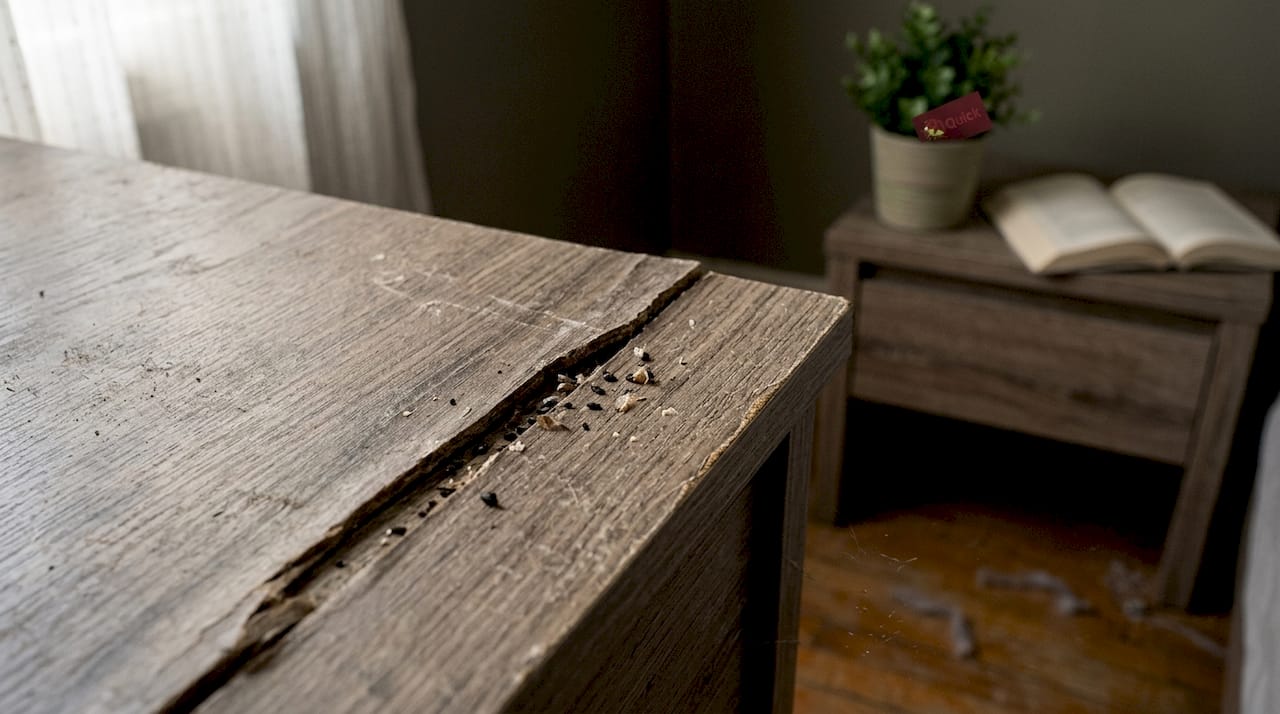
Thigmotaxis causes bedbugs to squeeze into mattress seams, furniture joints, baseboards, electrical outlets, and the folds of curtains. A surface spray applied to the top of a mattress will not penetrate the seam where dozens of bugs are sheltering. The same principle applies to a sofa, a bed frame, or a skirting board. The bugs are not on the surface. They are inside the structure.
Nocturnal feeding adds another layer of difficulty. Bedbugs feed at night, typically between 2am and 5am, and retreat before dawn. This means they spend the vast majority of their time in hiding, reducing their exposure to any residual pesticide left on surfaces.
- Bedbugs have been found in wall voids, behind electrical faceplates, inside hollow bed frames, and even within the spines of books stored near a bed.
- A single missed hiding spot, one overlooked seam or crack, is enough to guarantee reinfestation.
- Improper treatment can make this worse. Store-bought pyrethroids repel bedbugs rather than kill them, scattering the colony deeper into wall voids and further from reach.
Pro Tip: Before any professional treatment, remove clutter from the floor and pull furniture away from walls. This is not just tidying. It reduces the number of hiding spots available and gives any treatment a far better chance of contact with the bugs.
Why do DIY and single-treatment methods usually fail?
Most homeowners reach for a can of spray from a hardware shop as a first response. This approach is understandable, but the evidence against it is clear.
- Pyrethroid resistance is widespread. Many bedbug populations across the UK have developed significant resistance to pyrethroid-based insecticides, the active ingredient in most consumer sprays. Applying a product the bugs are already resistant to does little beyond disturbing them.
- Eggs are chemically protected. Even where a spray kills adults on contact, the eggs laid in crevices are shielded by their outer casing. They hatch into a pesticide-free environment two weeks later.
- Coverage is almost always incomplete. A homeowner spraying visible surfaces will miss the vast majority of the infestation, which is hidden in seams, voids, and joints. Professional-grade treatment requires methodical inspection of every potential hiding site.
- Repellent sprays scatter the colony. As noted, colony fragmentation from improper spray use pushes bedbugs into wall voids and adjacent rooms, spreading the infestation rather than containing it.
The data on professional treatment reflects this reality. Only 6.1% of professionals report eliminating an infestation in a single visit, and most require two to three visits for effective control. If trained technicians with professional-grade products rarely succeed in one visit, a single DIY attempt stands very little chance.
What makes multi-unit housing a particular challenge?
For anyone living in a flat, a converted house, or any shared building, bedbug infestation challenges extend well beyond your own four walls. Bedbugs do not respect boundaries between properties.
| Reinfestation pathway | How it works | Why it matters |
|---|---|---|
| Plumbing and electrical conduits | Bedbugs travel through pipe gaps and cable runs between units | Treatment of one flat fails if neighbours are untreated |
| Shared wall voids | Bugs move through gaps in partition walls | Structural access points are rarely sealed |
| Secondhand furniture | Infested items brought into a building introduce new populations | One resident’s purchase can affect an entire block |
| Travel and luggage | Bugs hitchhike in suitcases and clothing | Reinfestation can occur even after successful treatment |
Bedbugs migrate between units via plumbing and electrical conduits, making individual treatment ineffective without coordinated action across the building. This is one of the most overlooked bedbug removal obstacles in London’s dense housing stock. A landlord or property manager who treats only the reported flat while leaving adjacent units uninspected is almost guaranteeing a return call within weeks. Coordinated pest management across all units is not a luxury in multi-unit buildings. It is a requirement for lasting control.
Social stigma compounds this problem significantly. Stigma delays reporting of infestations, allowing populations to grow exponentially before any treatment begins. Residents who feel embarrassed wait longer, and by the time a professional is called, the infestation has spread to multiple rooms or units.
What treatment approaches actually work?
The effectiveness of bedbug treatments improves dramatically when multiple methods are combined rather than relying on any single approach. This is the principle behind Integrated Pest Management, or IPM.
| Method | Strengths | Limitations |
|---|---|---|
| Heat treatment (54°C for 4+ hours) | Kills all life stages including eggs; 95%+ success rate in one visit | Higher cost; items sensitive to heat must be removed |
| Professional chemical treatment | Residual effect protects against hatching eggs | Requires multiple visits; resistance is a growing concern |
| Steam treatment | Penetrates seams and fabric without chemicals | Limited reach into wall voids; must be thorough |
| Vacuuming and physical removal | Reduces population immediately | Does not kill eggs; must be combined with other methods |
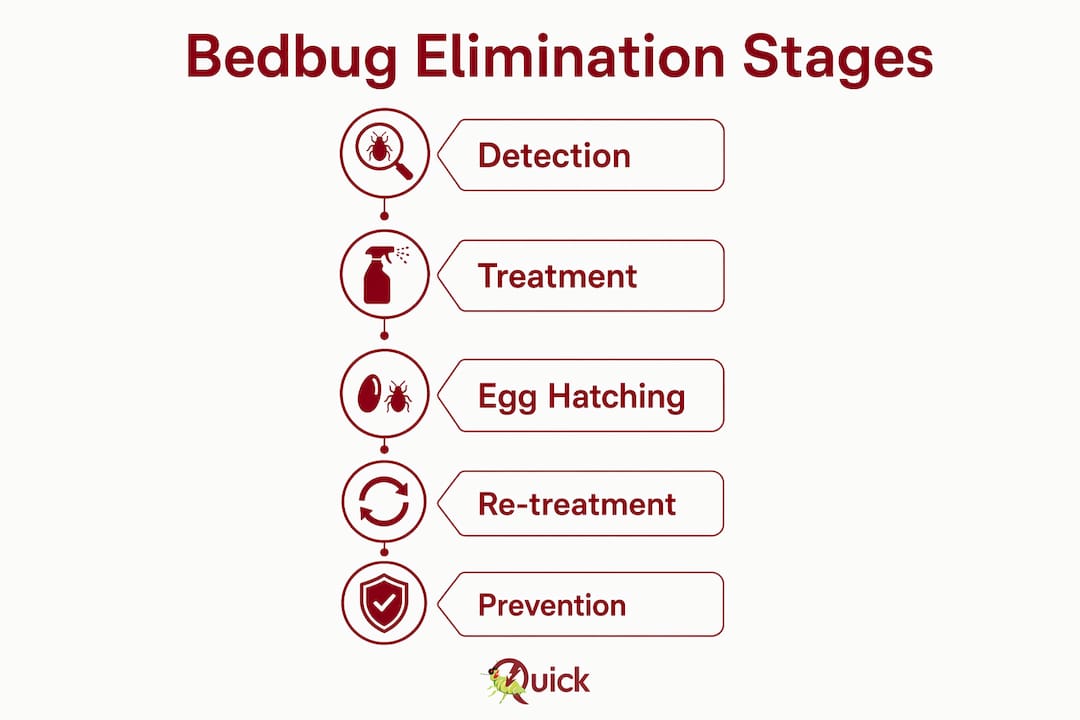
Integrated Pest Management combining heat, chemical, and physical methods is necessary precisely because bedbugs resist many insecticides. Heat treatment is the closest thing to a single-visit solution, maintaining 54°C throughout a property for four or more hours to kill every life stage present. However, even heat treatment requires a follow-up inspection to confirm success and catch any reinfestation from adjacent units or overlooked items. Missing even one seam or joint during a non-chemical treatment guarantees reinfestation.
Key takeaways
Bedbugs are hard to eliminate because their biology, hiding behaviour, and resistance to common treatments all work together to defeat single-method approaches.
| Point | Details |
|---|---|
| Eggs survive most sprays | Bedbug eggs resist pesticides and hatch up to 14 days after treatment, requiring follow-up visits. |
| Thigmotaxis hides the colony | Bedbugs press into seams and voids that surface sprays cannot reach, making thorough inspection critical. |
| DIY sprays can worsen infestations | Pyrethroid repellents scatter bedbugs into wall voids, spreading the problem rather than solving it. |
| Multi-unit buildings need coordinated treatment | Bedbugs travel between flats via conduits; treating one unit without addressing neighbours fails consistently. |
| Heat treatment offers the best single-visit results | Maintaining 54°C for four or more hours kills all life stages with a success rate above 95%. |
Bedbugs do not reward half-measures: my honest assessment
I have seen the same pattern repeat itself more times than I can count. Someone discovers bedbugs, tries a shop-bought spray, thinks the problem has gone, and calls us six weeks later with a far worse infestation than they started with. The spray did not fail because it was applied incorrectly. It failed because it was the wrong tool for the job.
The thing that frustrates me most is the stigma. People wait. They hope the problem will resolve itself, or they try three different products before accepting that professional help is needed. By that point, what might have been a contained infestation in one room has spread to the entire flat. Early intervention is not just more effective. It is significantly cheaper and less disruptive.
My honest advice: do not measure success by whether you stop seeing bedbugs after a first treatment. Measure it by whether you are still clear two weeks later, then four weeks later. That two-week window, when eggs are hatching, is where most apparent successes unravel. Any treatment plan that does not include a follow-up timed to that hatching window is incomplete by design.
The biology of these insects is not going to change. What can change is how quickly you respond and how thoroughly you treat. Bedbugs are beatable. They just require patience, professional expertise, and a realistic understanding of what elimination actually involves.
— Azmat
Get professional bedbug treatment in London
If you are dealing with a bedbug infestation, the most effective step you can take right now is to contact a qualified professional before the population grows further.

Quickpestcontrol provides specialist bedbug treatment across London, using Integrated Pest Management methods that combine heat, steam, and targeted chemical treatments to address all life stages. Every treatment plan is tailored to your property, whether you are in a single flat or managing a multi-unit building. Quickpestcontrol’s qualified technicians carry out thorough inspections, identify all hiding sites, and schedule follow-up visits timed to the bedbug life cycle. For urgent cases, a callback is guaranteed within one hour. Do not wait for the infestation to spread. Explore Quickpestcontrol’s full range of pest control services and book an inspection today.
FAQ
Why do bedbugs come back after treatment?
Bedbug eggs resist most pesticides and hatch up to 14 days after treatment, releasing a new generation into a treated space. Without a follow-up visit timed to that hatching window, reinfestation is almost inevitable.
Can I get rid of bedbugs myself?
DIY methods rarely succeed because store-bought pyrethroids repel rather than kill resistant populations, and most homeowners cannot reach the cryptic hiding spots where bedbugs shelter. Professional treatment achieves control in two to three visits for the majority of infestations.
How long does it take to fully eliminate bedbugs?
Most infestations require two to three professional visits over a period of three to six weeks, timed around the bedbug egg hatching cycle. Heat treatment can achieve results in a single visit, though a follow-up inspection is still recommended.
Do bedbugs spread between flats in a block?
Yes. Bedbugs travel through plumbing, electrical conduits, and wall voids between adjacent units. Treating one flat without coordinating with neighbours or the building manager significantly increases the risk of reinfestation.
Is heat treatment worth the cost?
Heat treatment maintains temperatures above 54°C throughout a property, killing all life stages including eggs in a single visit with a success rate above 95%. For severe or recurring infestations, the higher upfront cost is typically offset by fewer return visits and faster resolution.