Pest prevention is defined as the proactive elimination of conditions that allow pests to enter, survive, and reproduce in a property, and it consistently outperforms reactive treatment as a long-term pest management strategy. The EPA and UC IPM both place prevention at the foundation of responsible pest control, ahead of any chemical intervention. For homeowners and property managers in London, understanding why pest prevention beats pest treatment is the difference between a one-time fix and a lasting solution. Pests like rats, ants, and bed bugs have no trouble finding a meal or a hiding spot in an untreated property. Remove those opportunities, and you remove the infestation before it starts.
Why pest prevention beats pest treatment
Prevention works because it targets the root causes of infestations, not just the visible symptoms. Pests require four things to thrive: food, water, shelter, and access. EPA’s prevention checklist addresses all four directly, recommending sealed food containers, fixed water leaks, removed clutter, and sealed entry points using caulk and steel wool. Treatment, by contrast, kills pests already present but leaves those four conditions intact, which means new pests move in quickly.
The cycle of repeated treatment is one of the most frustrating and costly patterns a property owner can fall into. A technician treats for mice, the mice are gone, but the gap behind the kitchen baseboard is still there. Within weeks, new mice are slipping through that same gap. Treatment without exclusion leaves properties vulnerable to reinfestation because entry points remain open. Prevention closes that loop permanently.
Here is what a solid prevention approach addresses:
- Food sources: Store all food in sealed containers, including pet food. Wipe counters nightly and clean behind appliances regularly.
- Water sources: Fix dripping faucets, clear blocked gutters, and check under sinks for slow leaks that create moisture pests love.
- Shelter: Removing clutter such as stacks of newspapers, cardboard boxes, and unused furniture eliminates the breeding sites pests rely on.
- Entry points: Seal cracks in walls, gaps around pipes, and spaces under doors with caulk, steel wool, or wire mesh.
Pro Tip: Inspect the exterior of your property at least twice a year, focusing on where utility lines enter the building. A gap the width of a pencil is wide enough for a mouse to squeeze through.
How does integrated pest management support prevention?
Integrated Pest Management, or IPM, is the professional framework that puts prevention first and treatment second. UC IPM’s property management guidance defines prevention as monitoring and eliminating conducive conditions rather than reacting to visible infestations. This distinction matters enormously for property managers overseeing multiple units, where one untreated infestation can spread across an entire building.
IPM follows a structured decision process before any chemical is applied:
- Identify the pest correctly. Misidentification leads to ineffective treatment. A correct pest identification step prevents wasted money on the wrong product.
- Monitor and assess. Set traps, check entry points, and document pest activity over time to understand the scale of the problem.
- Set action thresholds. Economic injury levels and thresholds define the pest density at which intervention is warranted, preventing unnecessary treatments before they are actually needed.
- Apply preventive controls first. Adjust conditions, seal entry points, and remove attractants before reaching for any pesticide.
- Use targeted treatment only when necessary. IPM applies pesticides based on monitoring data and thresholds, not on fixed schedules, which reduces chemical use and improves results.
“Prevention, through monitoring and managing conditions, provides better long-term pest control than reacting to visible activity alone.” — UC IPM
This framework is not just for agricultural settings. Quickpestcontrol applies IPM principles to residential and commercial properties across London, combining inspection, monitoring, and targeted intervention to deliver results that last.
Common misconceptions about prevention vs. treatment
The biggest misconception is that pest prevention is simply about using fewer chemicals. That framing misses the point entirely. Prevention is a decision-based process that involves monitoring, correct identification, and addressing the conditions that attract pests in the first place. Reducing pesticide use is a byproduct of good prevention, not the goal itself.
A second common mistake is treating prevention and treatment as an either-or choice. They are not. Prevention is the foundation, and treatment is the backup when prevention alone is insufficient. The problem arises when property owners skip prevention entirely and rely on repeated treatments as their only strategy. That approach is expensive, disruptive, and rarely solves the underlying problem.
Here are the misconceptions worth correcting:
- “Treatment is the quick fix.” Treatment removes pests that are already present, but without sealing entry points and removing attractants, reinfestation follows quickly.
- “Prevention is too time-consuming.” Most prevention steps, such as fixing a leaky pipe or sealing a gap around a drainpipe, take less than an hour and protect the property for years.
- “Any pesticide will work if the pest is identified.” Misidentification leads to ineffective treatment and wasted expense. Correct identification is the first step in both prevention and treatment.
- “Prevention only matters for severe infestations.” Prevention is most effective before any infestation occurs. Waiting for a visible problem means prevention has already partially failed.
Pro Tip: If you manage multiple rental units, schedule a quarterly walkthrough with a checklist covering entry points, moisture sources, and clutter accumulation. Catching one unit’s problem early stops it from becoming a building-wide infestation.
Practical pest prevention strategies for homeowners and property managers
Prevention strategies fall into three categories: physical exclusion, environmental management, and monitoring. Each plays a distinct role, and all three work together.
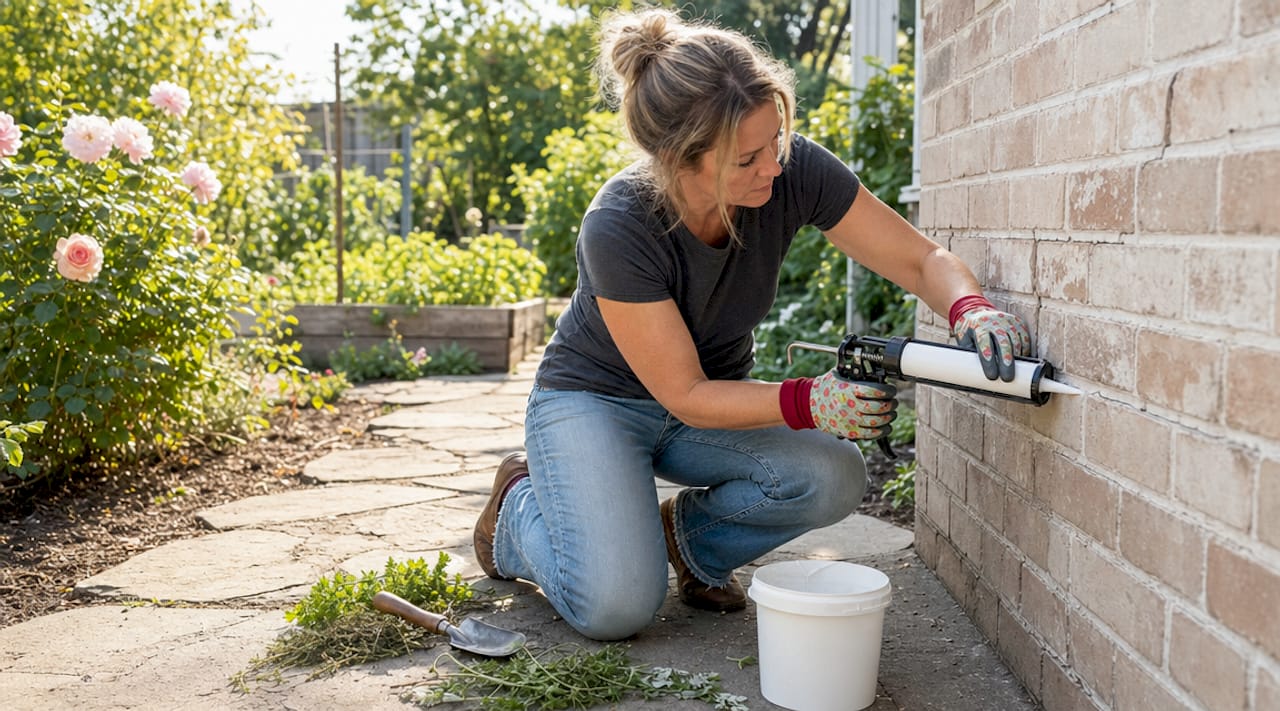
Physical exclusion is the most direct form of prevention. Seal cracks in exterior walls, gaps around pipes and cables, and spaces under doors using caulk, steel wool, or wire mesh. Rats can chew through soft materials, so steel wool packed into gaps before caulking is a reliable combination. For ants, the prevention tactics that work best focus on sealing the micro-gaps around window frames and utility entry points where scout ants first enter.
Environmental management removes the conditions pests need to survive. Store dry goods in airtight containers, not cardboard boxes. Fix dripping taps and check under sinks monthly for slow leaks. Keep outdoor bins away from the building and use lids that seal tightly. Inside, remove stacks of paper, old cardboard, and unused furniture from storage areas, since these create warm, sheltered breeding sites for cockroaches and rodents.
| Prevention method | Effort level | Long-term effectiveness |
|---|---|---|
| Sealing entry points | Low to medium | Very high |
| Removing food sources | Low | High |
| Fixing moisture issues | Medium | High |
| Decluttering storage areas | Medium | Medium to high |
| Regular monitoring | Low | Very high when consistent |
Monitoring is the step most homeowners skip, and it is the one that catches problems early. Place sticky traps in corners, behind appliances, and in storage areas. Check them monthly. A single mouse on a trap in January is a manageable problem. A colony discovered in March is not. For property managers, professional inspection services provide a structured baseline that makes monitoring far more effective over time.
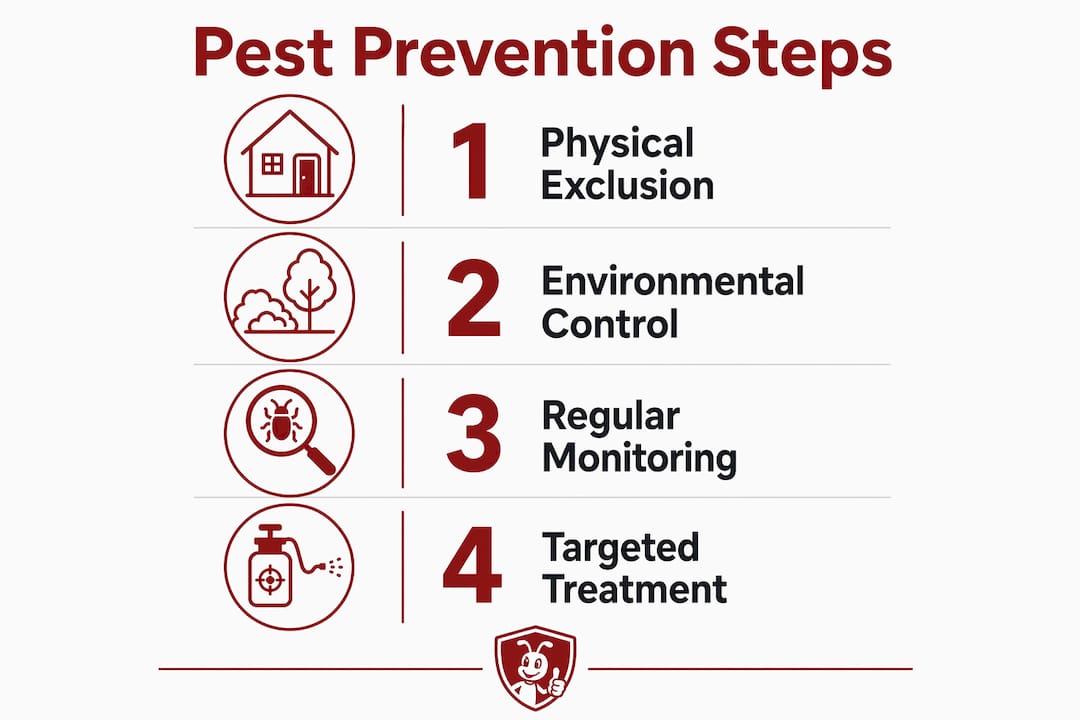
When prevention steps are in place and monitoring shows persistent activity, targeted treatment becomes appropriate. Baits and low-toxicity pesticides applied after preventive measures follow EPA guidance and avoid the overuse that leads to resistance build-up.
What are the long-term benefits of prevention-first pest management?
Prevention-first pest management delivers measurable advantages across four areas that matter most to property owners.
Fewer outbreaks. Properties with active prevention programs experience fewer infestations because the conditions pests need are consistently removed. This is not a theoretical benefit. It is the direct result of cutting off food, water, shelter, and access before pests can establish a foothold.
Reduced chemical exposure. Homes and commercial properties that rely on prevention require fewer pesticide applications. This matters for families with children, residents with respiratory conditions, and property managers with legal obligations around chemical use in occupied buildings.
Less structural damage. Rodents gnaw through wiring, insulation, and joinery. Termites and carpenter ants compromise structural timber. Catching these pests early through monitoring, or preventing their entry entirely, avoids repair costs that can run into thousands of pounds. The London pest control guide from Quickpestcontrol covers the specific structural risks common to London properties in detail.
Lower overall cost. A single professional treatment for a moderate rat infestation costs significantly more than the annual cost of basic prevention measures. When you factor in repeat treatments, structural repairs, and the disruption to tenants or family life, prevention is not just more effective. It is far more economical.
Key takeaways
Pest prevention beats pest treatment because it eliminates the root conditions pests need to survive, making infestations far less likely and repeated treatments unnecessary.
| Point | Details |
|---|---|
| Prevention targets root causes | Removing food, water, shelter, and entry points stops infestations before they start. |
| IPM puts prevention first | UC IPM and EPA frameworks apply treatment only after preventive steps have been taken. |
| Treatment without exclusion fails | Sealing entry points must accompany any treatment to prevent rapid reinfestation. |
| Monitoring catches problems early | Monthly sticky trap checks and regular inspections turn major infestations into minor ones. |
| Prevention saves money long-term | Fewer treatments, less structural damage, and reduced chemical use lower total property costs. |
Why I believe prevention should always come first
From years of working in pest management across London properties, the pattern I see most often is this: a homeowner calls after a treatment has failed, not once but two or three times. The pests keep coming back. When you look at what was done, the treatment was applied correctly. The problem is that nothing else changed. The gap under the back door is still there. The leaking pipe under the kitchen sink is still dripping. The stack of old cardboard in the utility room is still sitting in the corner.
Treatment without prevention is like mopping the floor while the tap is still running. You can keep mopping, but the floor stays wet. I have seen this play out in Victorian terraces, modern flats, and large commercial properties alike. The structure does not matter. The principle does.
What I find most reassuring about the EPA and UC IPM frameworks is that they do not ask property owners to become pest control experts. They ask for consistency. Fix the leak. Seal the gap. Check the traps. These are not complicated tasks, but they require a routine. The properties that stay pest-free are almost always the ones where someone is paying attention on a regular basis, not just reacting when something goes wrong.
My honest recommendation is to treat prevention as maintenance, the same way you treat boiler servicing or gutter clearing. It is not glamorous, but it protects everything else.
— Azmat
How Quickpestcontrol supports prevention-first pest management
Quickpestcontrol brings prevention-first thinking to every job across London, whether you are a homeowner dealing with a recurring ant problem or a property manager responsible for dozens of units.

The team at Quickpestcontrol uses an Integrated Pest Management approach that starts with a thorough inspection, identifies the conditions driving pest activity, and builds a plan that addresses those conditions directly. Treatment is applied when needed, using the lowest-risk options available. For ongoing protection, explore the full range of pest control services tailored to residential and commercial properties. If you suspect an active infestation, Quickpestcontrol guarantees a callback within an hour. Prevention is the goal, and professional support makes it far easier to get there and stay there.
FAQ
Why is pest prevention better than pest treatment?
Pest prevention removes the food, water, shelter, and entry points pests need to survive, stopping infestations before they begin. Treatment addresses existing pests but leaves the underlying conditions intact, which leads to reinfestation.
What does integrated pest management mean for homeowners?
IPM is a structured approach that prioritizes monitoring, correct identification, and preventive measures before any pesticide is used. It reduces chemical exposure while delivering more reliable, long-term pest control results.
How often should I inspect my property for pests?
Check sticky traps monthly and conduct a full exterior inspection at least twice a year, focusing on entry points, moisture sources, and clutter. Property managers overseeing multiple units benefit from quarterly walkthroughs with a standardized checklist.
Is pest prevention worth the cost compared to treatment?
Prevention costs less over time because it reduces the frequency of professional treatments, limits structural damage from pests like rodents and carpenter ants, and avoids the disruption of repeated infestations. The EPA recommends prevention as the first step precisely because it is both effective and economical.
What are the most effective pest prevention techniques?
Sealing entry points with caulk and steel wool, removing food and water sources, decluttering storage areas, and maintaining a regular monitoring routine are the most effective steps. When these measures are in place, targeted treatment becomes a last resort rather than a recurring expense.