An exterminator is a trained pest management professional who identifies, eliminates, and prevents infestations through a structured process that goes far beyond spraying chemicals. Understanding what does an exterminator actually do helps you set realistic expectations, prepare your home properly, and get the most out of every service visit. The industry term for this approach is Integrated Pest Management (IPM), a science-backed framework used by qualified technicians at companies like Quickpestcontrol to deliver lasting results. Pest control is not a single event. It is a repeating cycle of inspection, treatment, exclusion, and monitoring that protects your home and health over time.
What does an exterminator actually do during an inspection?
The inspection is where every professional pest control visit begins, and it is the step that separates a trained technician from a spray-and-go service. Professional pest control involves inspection and selecting an appropriate control method before any product is applied. Skipping this step is like a doctor prescribing medication without examining the patient first.
During a thorough inspection, a technician covers both the interior and exterior of your property. They are looking for far more than live pests. Here is what a professional assessment typically covers:
- Pest species identification: Droppings, shed skins, gnaw marks, and nesting material each point to a specific pest. A rat dropping looks nothing like a cockroach egg case, and confusing the two leads to the wrong treatment.
- Extent of the infestation: A technician maps where activity is concentrated and estimates population size to determine treatment intensity.
- Entry points: Gaps around pipes, cracks in foundations, and poorly sealed vents are documented as pest entry conditions that must be addressed to prevent reinfestation.
- Conducive conditions: Moisture under a sink, clutter in a basement, or food debris behind appliances all attract pests. Identifying these conditions is as important as finding the pests themselves.
- Specialist tools: UV lights reveal urine trails invisible to the naked eye. Remote cameras inspect wall cavities. Glue traps placed during the inspection provide population data before treatment begins.
The inspection report guides every decision that follows. Without it, treatment is guesswork. With it, the technician can select the right product, the right application method, and the right locations to target.
Pro Tip: Before your technician arrives, note where you have seen pest activity and when. Specific observations like “I saw two mice near the boiler at night” give the inspector a starting point and can cut inspection time significantly.
What treatment methods do exterminators use?
Many homeowners expect a quick spray, but effective pest control involves multi-step inspection, treatment, exclusion, and ongoing monitoring. The treatment phase draws on a toolkit of methods chosen to match the pest, the property, and the risk level for people and pets inside.
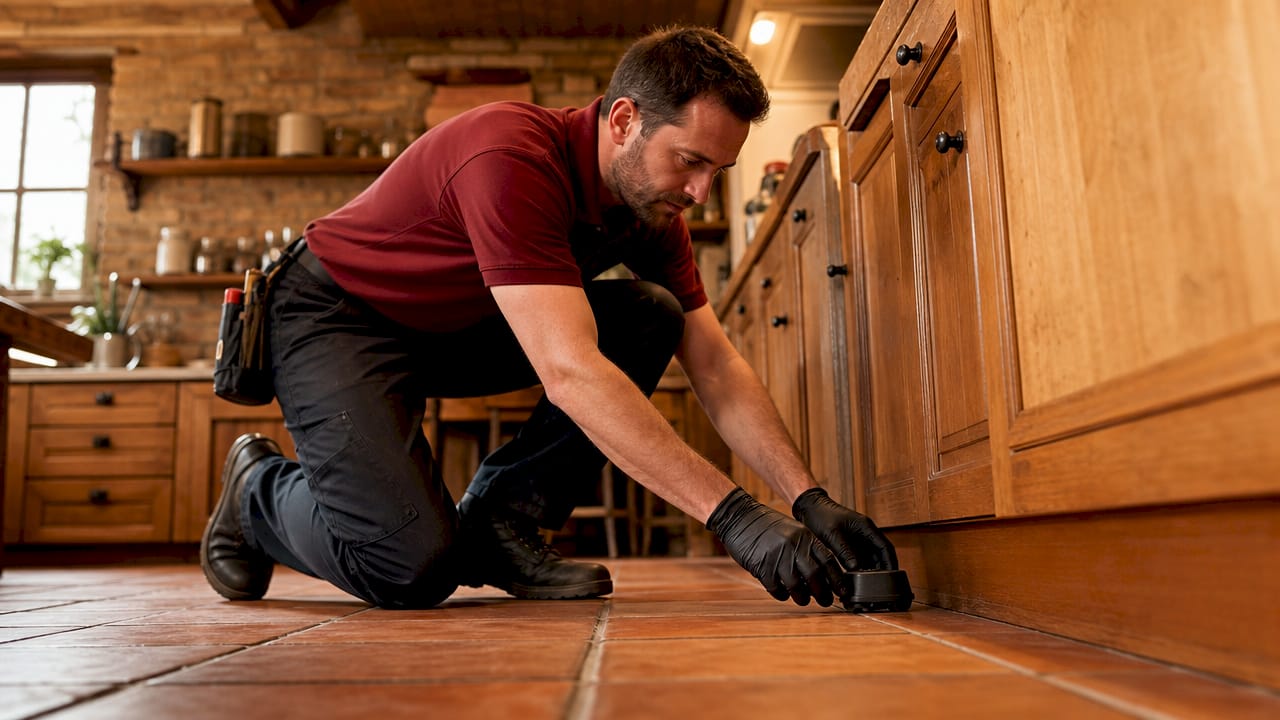
Targeted chemical applications
Crack and crevice treatments apply insecticide directly into the gaps where pests harbor, rest, and breed. This approach reduces unnecessary pesticide use by concentrating product where pests actually live rather than coating open surfaces. Broad spraying is rarely the right answer for indoor infestations and is increasingly replaced by precision methods in professional practice.
Baiting systems
Bait stations for ants and rodents work by exploiting natural foraging behavior. An ant carries toxic bait back to the colony, eliminating the queen and the nest rather than just the workers you can see. Rodent bait stations are tamper-resistant, protecting children and pets while delivering a lethal dose to rats and mice that are scavenging through your walls at night.
Physical exclusion
Sealing gaps, installing door sweeps, and fitting mesh over vents physically block pest access. This is not optional maintenance. Exclusion is a core treatment step. A mouse can slip through a gap the width of a pencil, so even small openings around utility pipes need attention.
Environmental modifications
Removing food sources, fixing dripping pipes, and improving ventilation in damp areas make your property less attractive to pests. These modifications are part of the IPM 5-step process that addresses root causes rather than just visible pests.
Specialist treatments
Bed bugs require heat treatment or targeted chemical application because they hide deep inside mattresses, bed frames, and wall voids. Quickpestcontrol’s technicians use advanced bed bug treatments that reach harborage sites standard sprays cannot penetrate.
Treatments applied according to EPA pesticide label requirements keep your family and pets safe, and in most cases occupants can remain in the property during service. Your technician will tell you exactly what to expect before any product is applied.
Pro Tip: Ask your technician which products they are using and request the safety data sheet. A professional will always have this information ready and will explain reentry times clearly.
Why do exterminators perform follow-up visits?
A single treatment visit rarely ends an infestation. Follow-up visits are crucial to reassess treatment success and adapt plans to prevent unnecessary repeated chemical use. Here is what a structured follow-up process looks like:
- Check monitoring devices. Glue traps and bait stations placed during the initial visit are inspected for activity. The number and location of captures tell the technician whether the population is declining or shifting.
- Assess treatment effectiveness. The technician looks for signs of live pest activity, new droppings, or fresh damage. A reduction in activity confirms the treatment is working. Continued activity signals that the plan needs adjustment.
- Service bait stations. Rodent and ant bait stations are replenished or repositioned based on capture data. Monitoring devices provide measurable progress data between visits and guide ongoing decisions.
- Reassess entry points. Exclusion work is checked to confirm seals are holding. Pests are persistent, and a gap that was sealed can be reopened by structural movement or further gnawing.
- Adjust the treatment plan. If a particular product or application method is underperforming, the technician switches approach. Follow-ups typically occur within days to a week after treatment depending on pest type and risk level.
- Set realistic timelines. A cockroach infestation may take three to four weeks to fully resolve. A rat problem in a London terrace house can take longer if neighboring properties are also affected. Your technician should give you a clear timeline at each visit.
The biggest misconception homeowners carry into pest control is that one visit solves everything. Pest control is a structured, ongoing process. Expecting instant results leads to frustration and, worse, to abandoning a treatment plan that was actually working.
How do exterminators help prevent future infestations?
Prevention is the final and most undervalued part of the exterminator job description. Effective extermination interrupts pest cycles by combining sanitation, physical exclusion, monitoring, and targeted treatment. Once the active infestation is resolved, the focus shifts to making sure it does not return.
The table below compares reactive pest control with preventive pest management so you can see the difference in outcomes:
| Approach | Focus | Outcome |
|---|---|---|
| Reactive treatment only | Kills visible pests after infestation | Short-term relief, high recurrence risk |
| Preventive pest management | Addresses root causes and entry points | Long-term protection, fewer repeat visits |
| Integrated Pest Management (IPM) | Combines both with ongoing monitoring | Sustainable control with minimal chemical use |
Preventive measures a technician will recommend or carry out include sealing structural gaps, advising on proper food storage, managing garden waste that harbors rodents, and controlling moisture in kitchens and bathrooms. London homes in particular face pressure from dense urban pest populations, so seasonal service plans provide a consistent barrier rather than waiting for the next infestation to appear.
Homeowner education is a genuine part of the service. A good technician explains why pests targeted your property, what conditions attracted them, and what you can do between visits to reduce risk. The pest identification resources available through Quickpestcontrol give homeowners a practical reference for spotting early warning signs before a small problem becomes a serious one.
Pro Tip: Schedule a preventive inspection in early spring and late autumn. These are the seasons when pests like rats, ants, and cockroaches are most actively seeking shelter and food indoors, making early intervention far more cost-effective than emergency treatment.
Key takeaways
Effective pest control is a multi-step process combining inspection, targeted treatment, physical exclusion, and follow-up monitoring to eliminate infestations and prevent their return.
| Point | Details |
|---|---|
| Inspection drives everything | Technicians identify pest species, entry points, and conducive conditions before selecting any treatment. |
| Treatment is targeted, not blanket | Crack and crevice applications, baiting, and exclusion replace broad spraying for safer, more effective results. |
| Follow-ups are non-negotiable | Monitoring devices and reassessment visits confirm effectiveness and allow plan adjustments within days of treatment. |
| Prevention extends results | Sealing entry points, sanitation advice, and seasonal plans stop reinfestation after active pests are eliminated. |
| IPM is the professional standard | Integrated Pest Management addresses root causes, not just visible pests, for long-term sustainable control. |
What I’ve learned about what homeowners actually need from exterminators
After years of working in pest management across London, the gap I see most often is not between good and bad treatments. It is between homeowners who understand the process and those who do not. When you understand what your technician is doing and why, you become an active part of the solution rather than a passive bystander waiting for results.
The homeowners who get the best outcomes are the ones who ask questions. They ask which pest was identified, where the entry points are, and what the follow-up schedule looks like. They do not just open the door and step aside. They engage with the plan.
I have also seen too many people abandon a professional treatment plan after two weeks because they still spotted a mouse. That is often exactly when the treatment is working. Rodents disturbed by bait become more visible before the population collapses. Patience, combined with a clear timeline from your technician, makes all the difference.
The other thing worth saying plainly: DIY pest control products from hardware stores are not equivalent to professional-grade treatments. They address surface activity without reaching harborage sites, and they do nothing about the entry points that allowed pests in. For a minor ant trail in summer, a retail product might hold things off. For a rodent infestation in a London terrace, or bed bugs in a rental property, professional intervention is not optional. It is the only approach that actually works.
— Azmat
How Quickpestcontrol can help with your pest problem
Quickpestcontrol brings qualified technicians, professional-grade treatments, and a genuine commitment to Integrated Pest Management to every property across London. Whether you are dealing with rats scavenging through your kitchen at night, ants trailing through your walls, or bed bugs hiding in your mattress, the team delivers targeted solutions built around your specific infestation.

Every service visit follows the same structured process: thorough inspection, targeted treatment, exclusion work, and a clear follow-up plan. Safety and communication are built into every appointment. You will always know what was applied, why, and when to expect results. For urgent situations, Quickpestcontrol promises a callback within one hour. Explore the full range of pest control services and take the first step toward a pest-free home today.
FAQ
What does an exterminator do on the first visit?
A professional exterminator conducts a thorough inspection to identify the pest species, map infestation areas, and locate entry points before presenting a targeted treatment plan. Clear communication and safety are emphasized throughout the appointment.
How long does pest control take to work?
Results depend on the pest and infestation size. Ant colonies may show significant reduction within one to two weeks, while rodent infestations in connected urban properties can take three to four weeks or longer to fully resolve.
Do I need to leave my home during exterminator treatment?
Most professional treatments allow occupants to remain in the property. Your technician will advise on any specific reentry times based on the products used and the treatment area.
Why do exterminators need follow-up visits?
Follow-up inspections confirm treatment effectiveness by checking monitoring devices, reassessing pest activity, and adjusting the plan as needed. A single visit rarely eliminates an established infestation completely.
What is Integrated Pest Management?
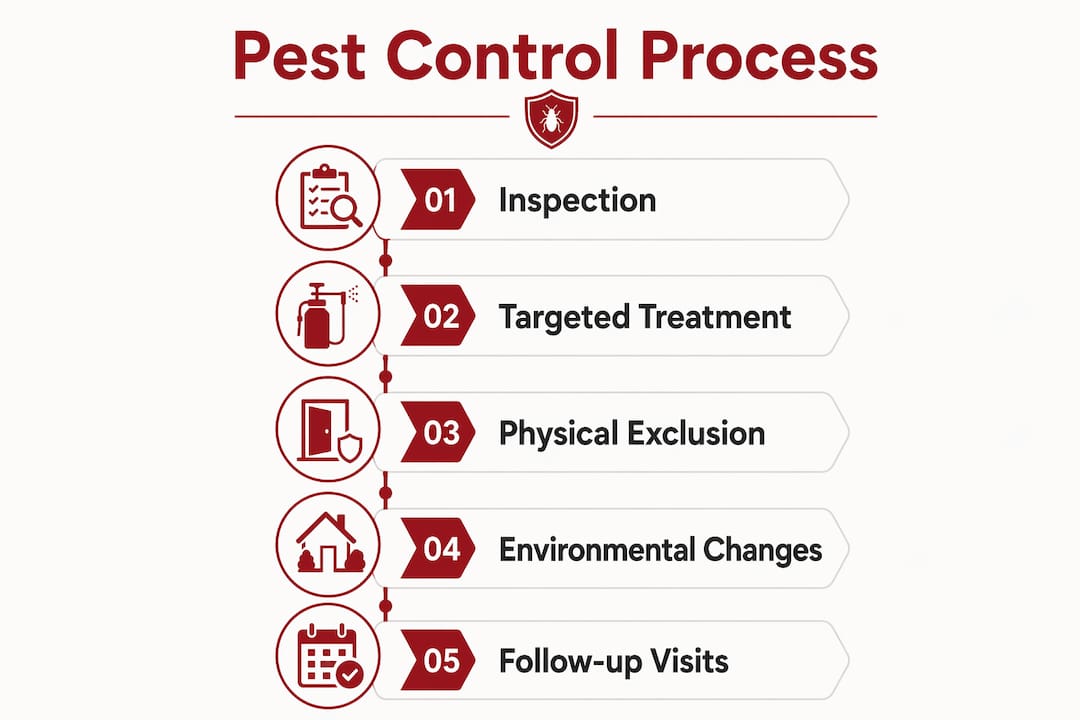
Integrated Pest Management is a 5-step process covering inspection, exclusion, monitoring, targeted treatment, and prevention. It focuses on root causes rather than just visible pests, reducing chemical use while delivering long-term control.